Apparently I Was Grinding Through the Night
A fictional comment from a partner starts a sensible discussion about grinding, jaw symptoms and what a nightguard can and cannot do.
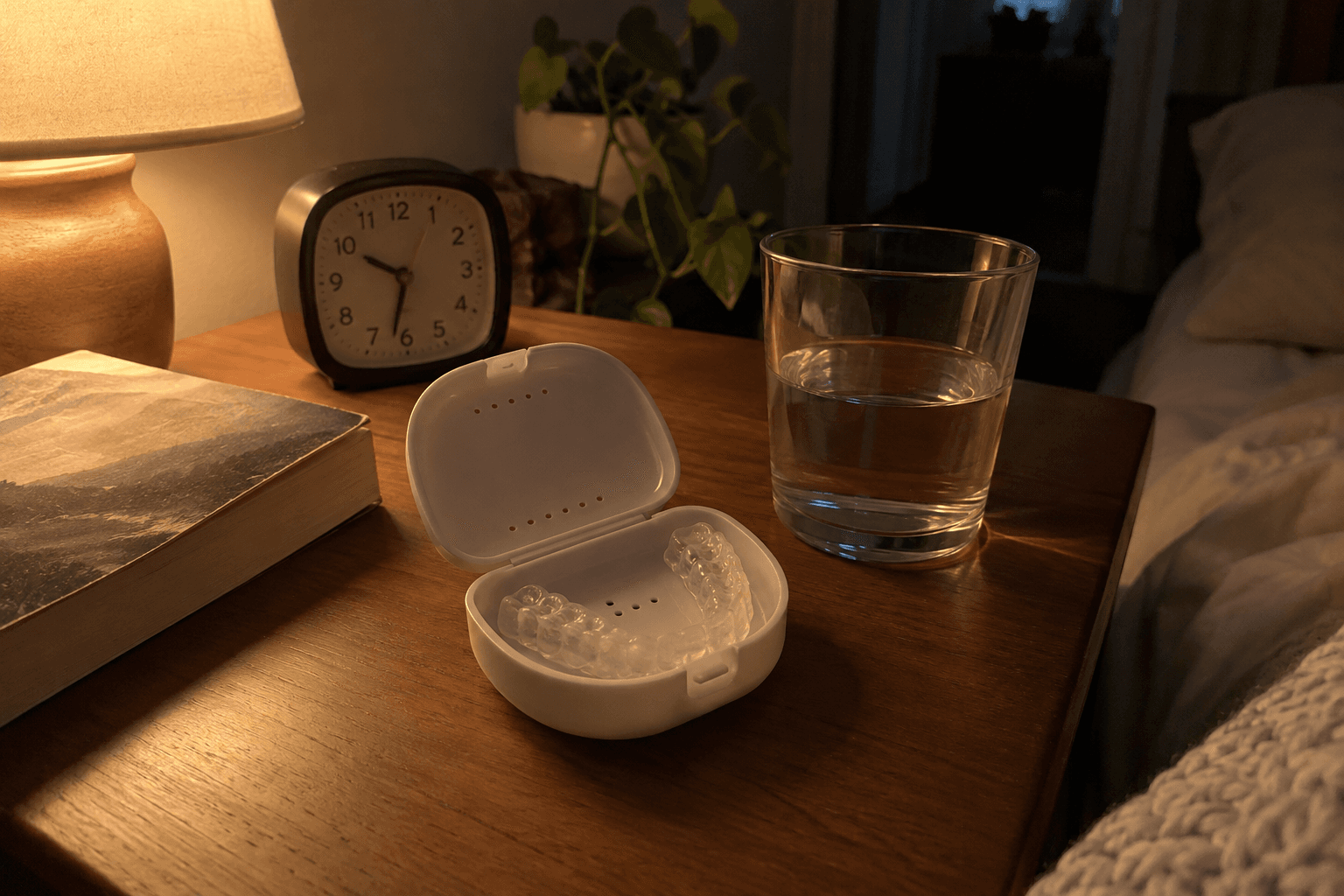
Someone else noticed
My partner told me I made a grinding noise in my sleep. I said I had not noticed. This was not a strong counterargument. I had, however, noticed that my jaw sometimes felt tired in the morning.
I looked at the guards on a pharmacy shelf and realized I did not know which problem I was trying to solve. Was the noise enough to identify it? Was the jaw soreness related? Did the shape of the appliance matter?
An assessment before a purchase
The Canadian Dental Association explains that a dentist may recommend a custom guard to create a barrier between the teeth and help protect them from grinding damage. It also discusses other management approaches. An appliance is part of a plan, not a promise to eliminate the habit.[1]
I noted the morning symptoms, the nights my partner had heard the noise and anything that seemed to make my jaw uncomfortable during the day. I booked an assessment and asked what signs the dentist would look for.
If a guard was recommended, I wanted to know how it should fit, how to clean it, when to wear it and what changes would need a review. I also wanted the cost before agreeing. A sports mouthguard and a nighttime appliance were not purchases I intended to treat as interchangeable.
Useful information, finally
That evening I thanked my partner for mentioning the noise. I had initially treated it like a review of my sleeping performance. It was useful information about something I could not observe myself.
I still hoped I was not also snoring. Apparently that was a separate conversation.
Arun