The Mouthguard Was at the Bottom of the Bag
A fictional hockey-bag cleanup reveals a chewed mouthguard. It starts a practical conversation about fit, care and using protection at practice too.
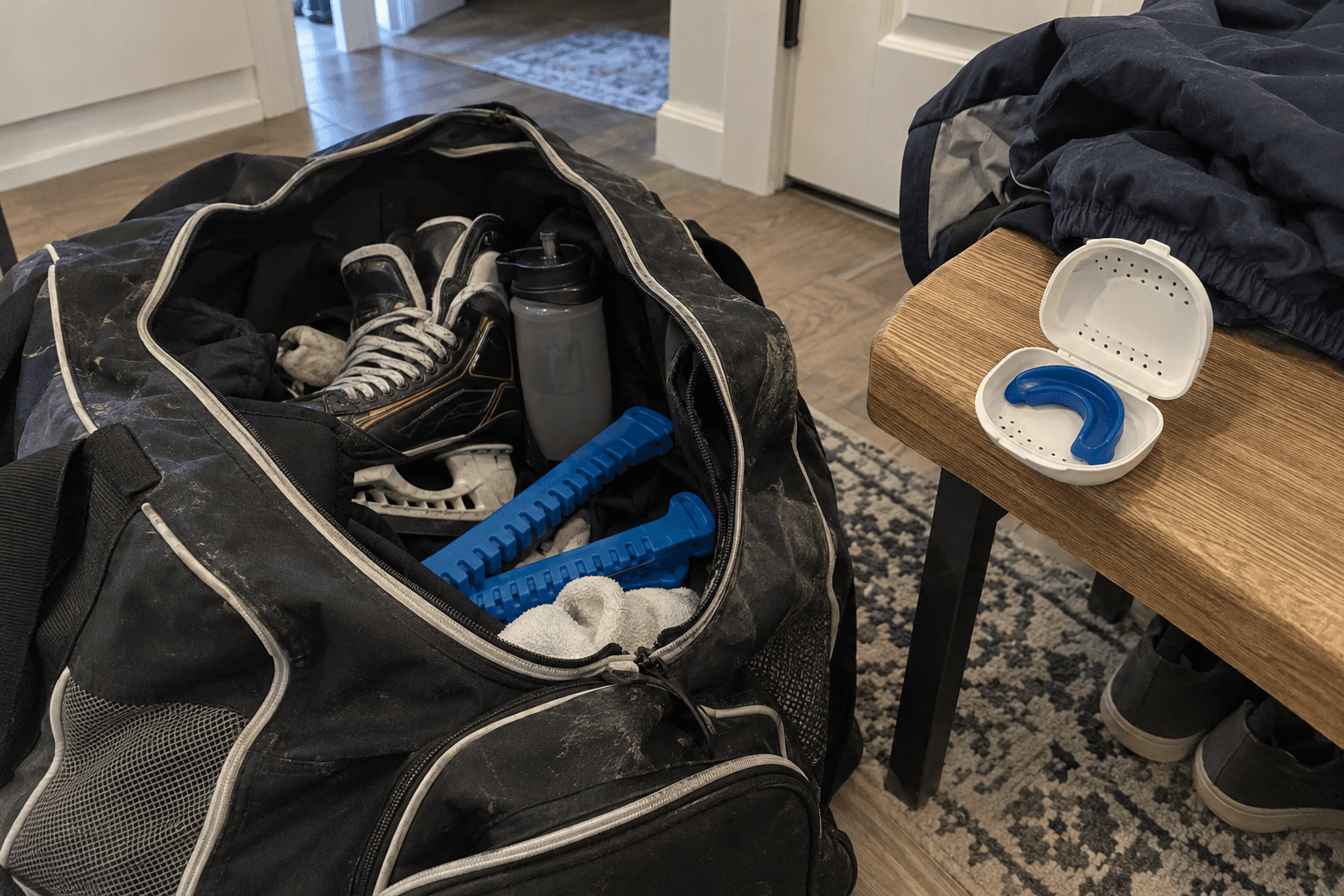
An unpleasant discovery
The mouthguard was under a sock, beside a granola bar that had become part of the lining. My son said he wore it. I asked when. He considered the question with the care usually reserved for explaining a missing homework sheet.
It had bite marks along one edge and a small tear. He said it felt loose and made talking awkward. I had been treating the purchase as the whole job. Apparently the object also had to be comfortable enough to stay in his mouth.
Fit was the next question
The Ontario Dental Association recommends a mouthguard for activities with a risk of contact with people or hard surfaces. It should fit properly without interfering with breathing or speech. Wear, cracks and changes in the bite are reasons to have its fit reviewed.[1]
We put the damaged guard aside and arranged advice about a suitable replacement before his next session. I wanted to ask how growth affected the fit and what would change if he started orthodontic treatment. I did not trim the uncomfortable edge myself.
We also found the case, which had been promoted to a home for two coins. The care plan was simple enough to repeat: clean it as directed, let it dry and keep it in its container away from heat. Protection belonged at practice as well as games.[1]
A shorter equipment check
The new equipment checklist went by the door with the skates and water bottle. I left the granola bar off it. That particular piece of equipment had already played its final season.
Nina