A Clicking Jaw and a Jaw That Locks Are Different
Describe jaw pain and movement changes clearly, avoid forcing a locked jaw, and seek prompt help when eating or drinking becomes difficult.
Describe the movement, not a diagnosis
Clicking, discomfort, difficulty opening and locking can occur with jaw joint or muscle problems. Tell your dentist which symptom you have, how long it has been happening, and whether eating or opening the mouth makes it worse. A sound alone does not establish the cause.[1]
Note whether the problem is on one side, whether it followed an injury, and whether you wake with soreness or notice clenching during the day. Bring this history without repeatedly provoking the click to demonstrate it.
Do not force a locked jaw
If the jaw locks or you cannot eat or drink, seek prompt professional help. Do not try forceful stretches or copy a jaw-manipulation video. Breathing difficulty, major injury or severe swelling needs emergency medical care.[1]
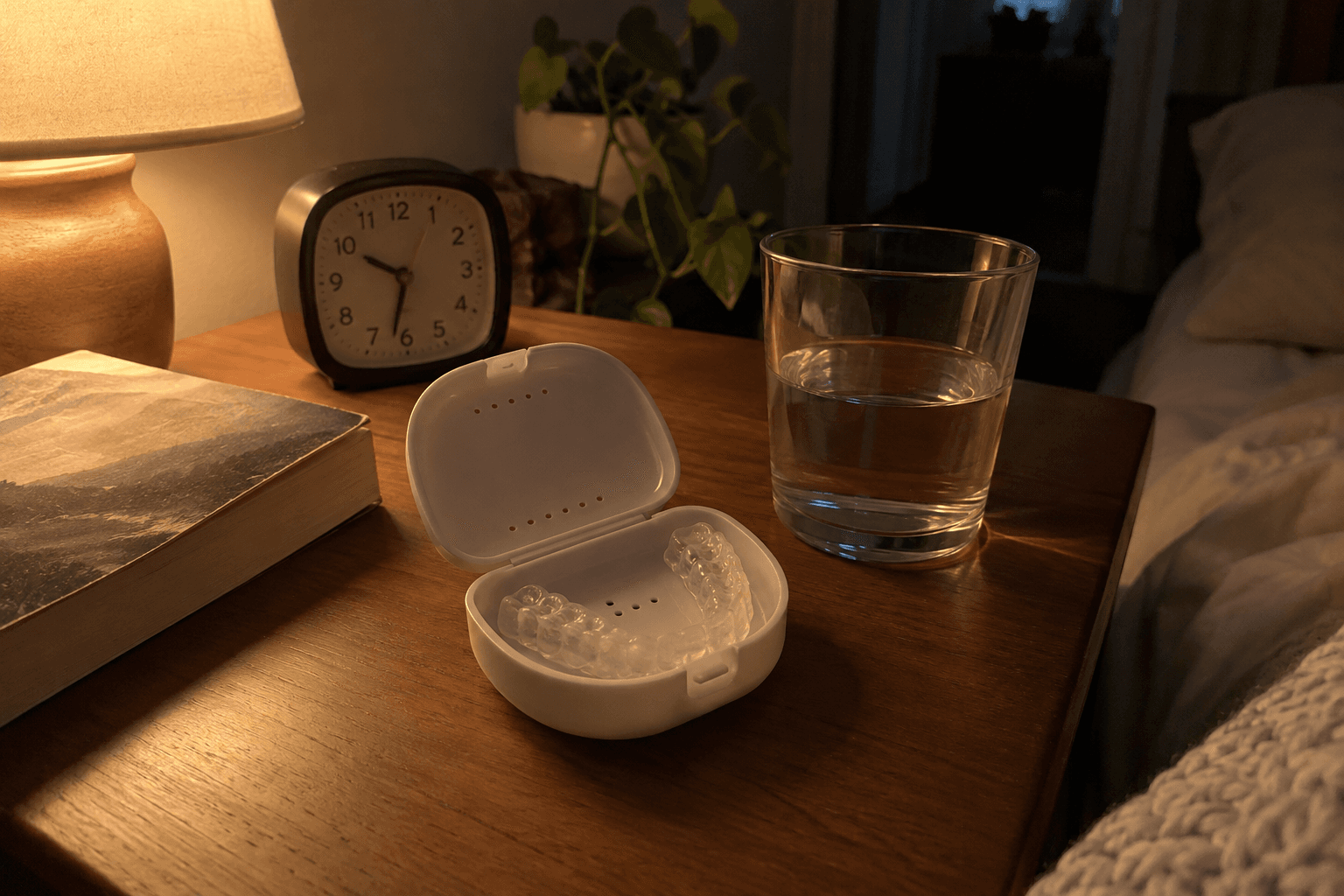
For ongoing discomfort, ask what conservative options are appropriate and what would justify further assessment. If an appliance is suggested, ask what problem it is intended to address and how its fit will be reviewed. Keep changes in function, rather than the loudness of a click, central to the conversation.