Your First Water-Flosser Session Can Be Less Splashy
Start with the tip inside your mouth, a low setting and a clear route around the gumline. Follow your device's instructions for setup and cleaning.

A water flosser uses a directed stream of water to clean around teeth and the gumline. It can be useful when hand flossing is difficult or when braces or fixed dental work complicate access. The ADA describes it as an option for interdental cleaning; it still belongs alongside twice-daily brushing.[1]
Set up before switching on
Read the instructions for your model, attach the appropriate tip securely and fill the reservoir as directed. Manufacturer guidance commonly starts with warm water and a low pressure setting. A cordless model's charging and water-handling instructions matter too: the Waterpik WP-450 guide, for example, requires disconnecting the charger before filling and use.[2][3]
Clear a little space beside the basin and keep a hand towel nearby. Find the on/off control while the device is still off. If you are using a countertop unit, work out where the handle and hose can move without pulling the base. These small preparations make the first attempt less distracting.
Put the tip in first
Lean over the sink, place the tip inside your mouth and then turn the water on. Keep your lips partly closed to limit splashing while letting water drain into the basin. Guide a standard tip along the gumline, pausing between teeth and working around the outside and inside surfaces. Turn the device off before removing it from your mouth.[2]
Start with a route you can remember, such as the outside of the upper teeth, their inside surfaces, then the lower teeth. Avoid racing past the back teeth because the reservoir is nearly empty. Refill according to the manual if necessary. The aim is controlled cleaning, not seeing how much pressure you can tolerate.
Match the tip to the job
Special tips for appliances or gum pockets may have different instructions. Ask for a demonstration if the device was recommended for a specific area. Do not improvise by pressing a standard nozzle deeply into the gum. If a spot hurts or bleeding continues, have the area and your technique checked.
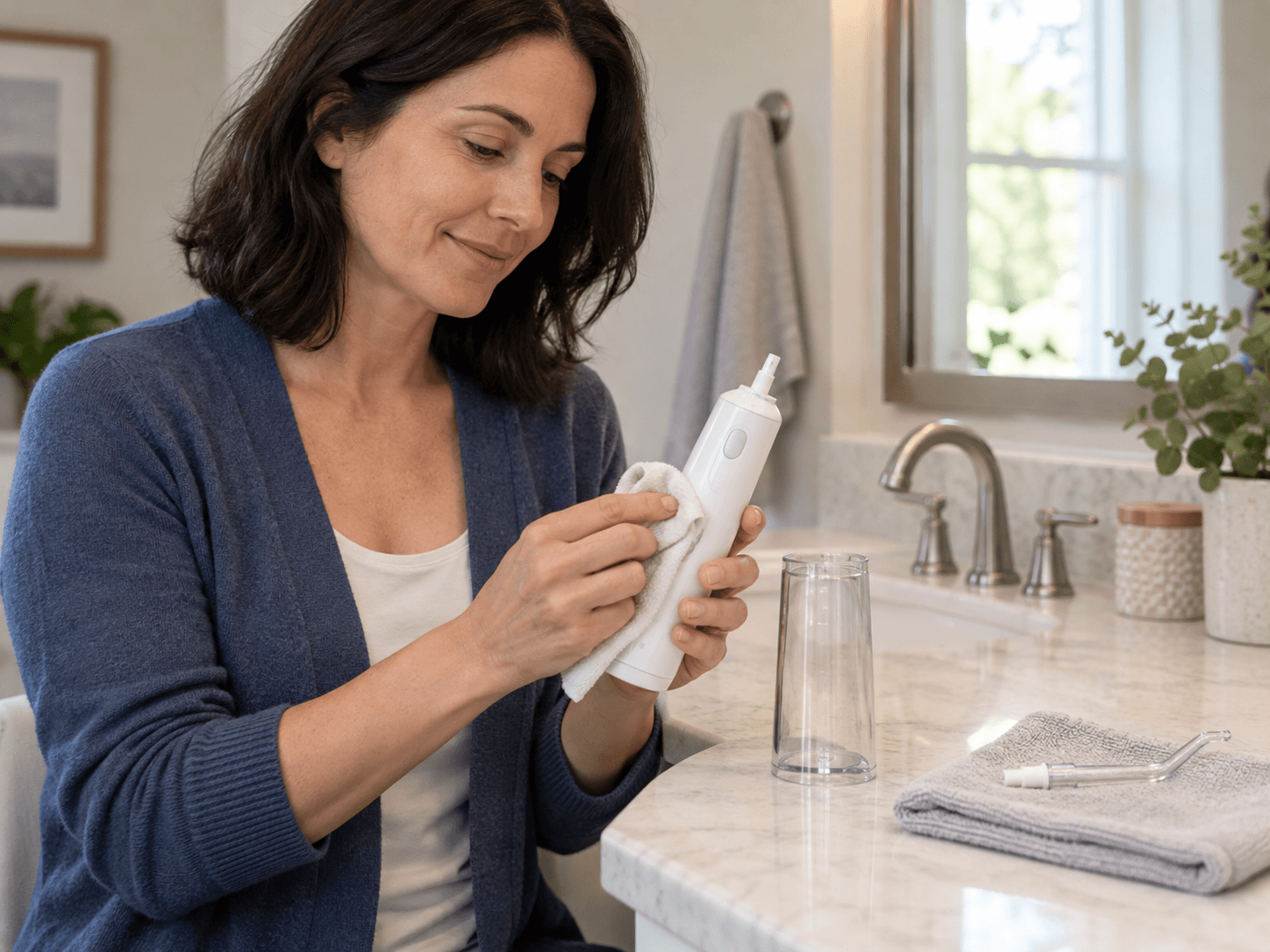
Afterward, empty and clean the reservoir and tip as your model's manual directs. Keep the instructions accessible until the routine is familiar. If the device is too awkward to hold, fill or aim, tell the hygienist which step is failing. A cleaning aid earns its place by being usable consistently.