An Interdental Brush Should Fit Without a Fight
Different gaps can need different brush sizes. Learn what a useful fitting demonstration looks like and when to choose another cleaning method.
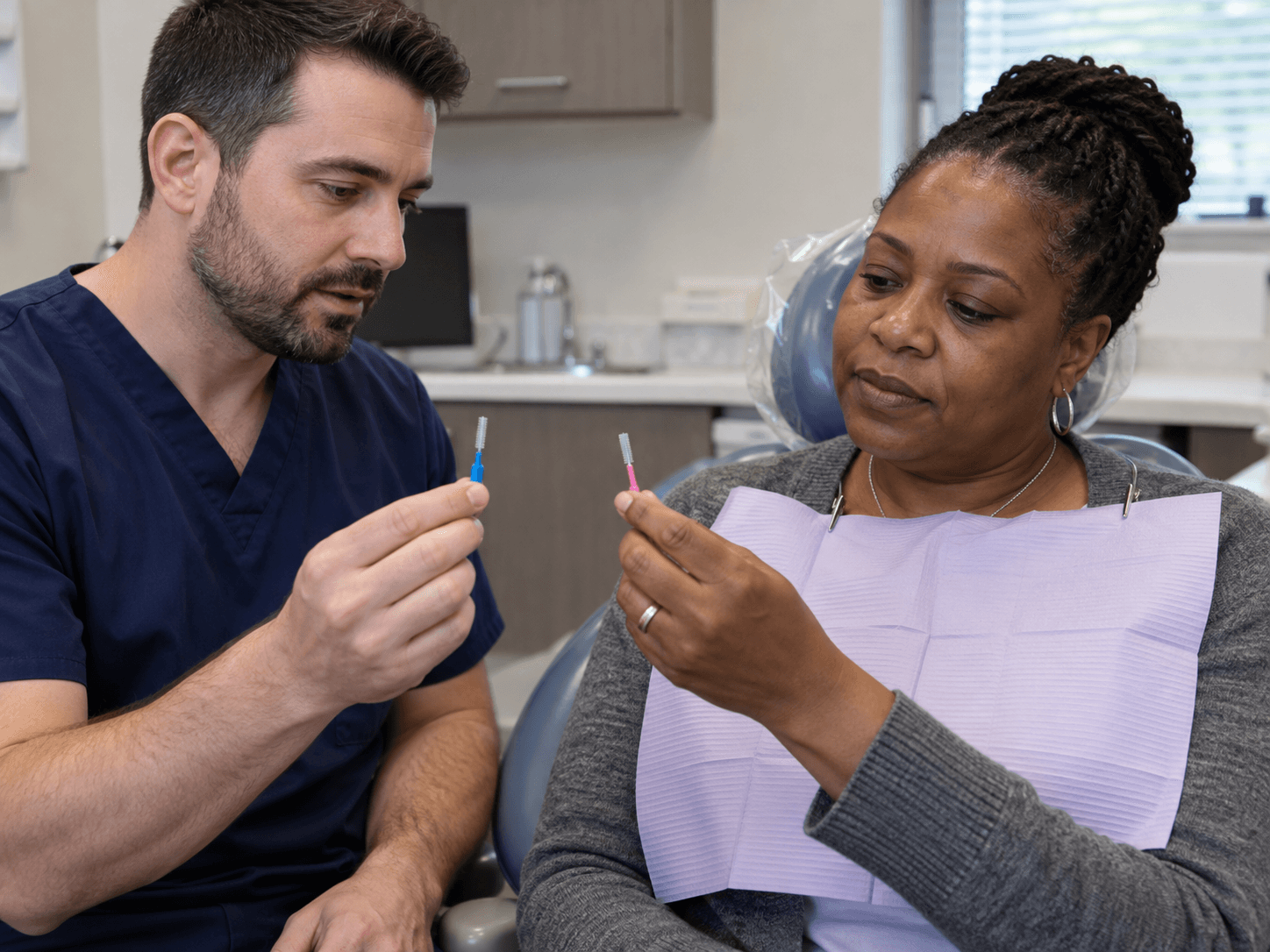
The little brush fits comfortably beside one tooth, then bends when you try the next gap. That does not mean you should push harder. Interdental brushes come in different sizes because the spaces between teeth vary. One mouth may need more than one size, and some tight contacts are better suited to another cleaning method.[3]
Ask for a fitting, then try it yourself
The European Federation of Periodontology recommends interdental brushes where they fit without trauma, with professional instruction. Ask the hygienist to demonstrate one front space and one harder-to-reach back space. Then hold the brush yourself. Watching a skilled person reach a gap is different from learning the angle with your own hand.[1]
A useful demonstration identifies the size, the entry point near the gumline and how gently the brush moves through. The bristles should clean the space without the brush becoming jammed. Leeds advises choosing the largest size that fits comfortably. Do not force a wire through a space that will not accept it.[2]
Make a small map of the sizes
If you need two sizes, ask which areas use each one. A note such as 'smaller at the front, larger beside these back teeth' is easier to use than remembering a handful of colours. Keep the packet or record the exact size designation when buying replacements; check the manufacturer's size information when changing brands.
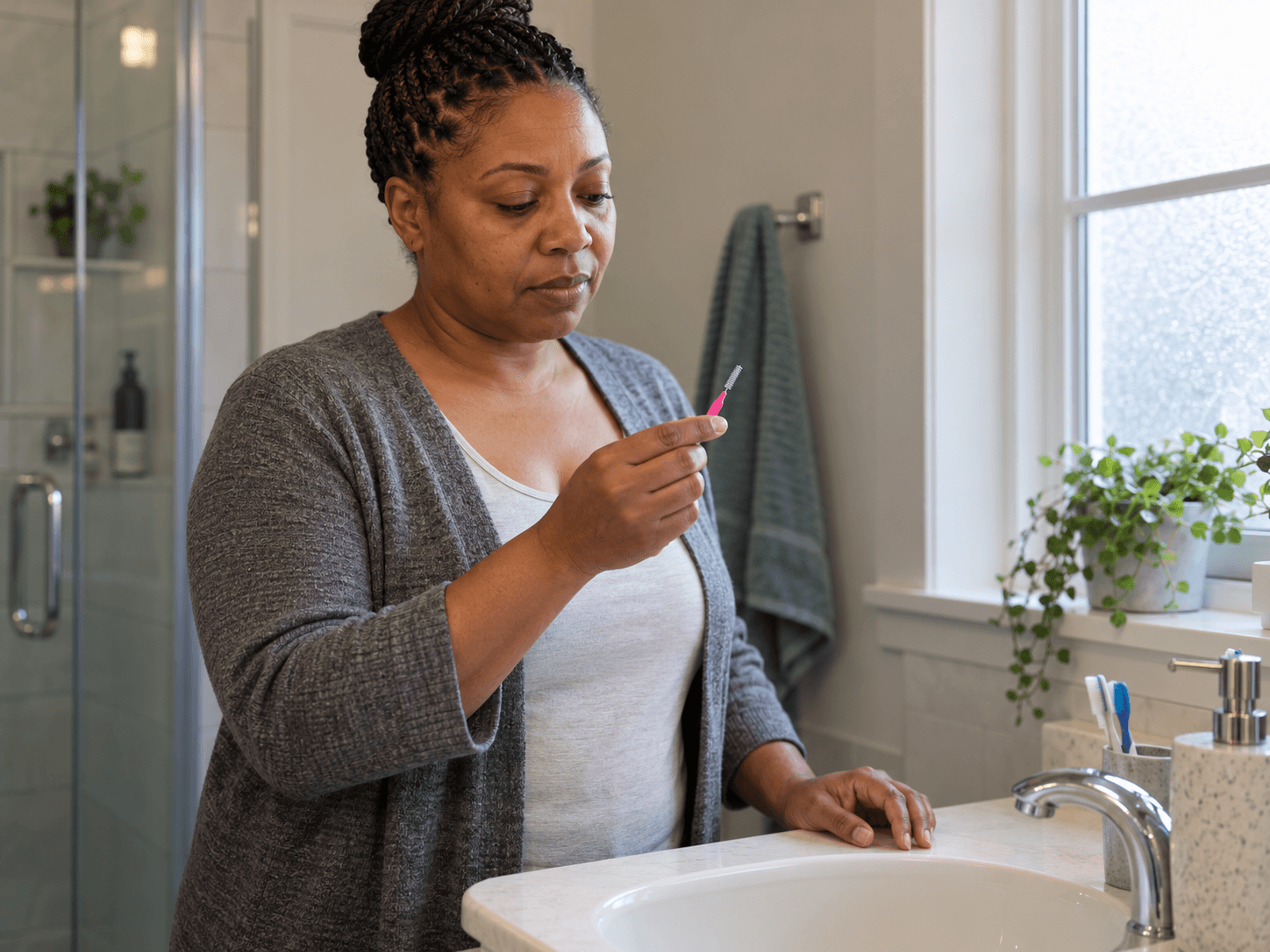
Use the demonstrated gentle in-and-out movement and work through the spaces systematically. Tight areas that cannot accept a brush may need floss or another suitable method. Replace a brush when its bristles are worn or its wire is distorted, rather than repeatedly straightening a damaged wire and trying again.[2][3]
Discomfort is information to bring back
Some bleeding can occur when you first clean inflamed gums. If it continues, or a particular space is painful, ask the dental team to check the fit and the gum rather than accepting pain as proof that the brush is working. NHS guidance advises getting advice if bleeding persists after the first few days.[3]
Bring the actual brushes to the next visit. Show the awkward gap and the movement that causes trouble. A different size, handle or approach may make the task manageable. The useful result is a cleaning method you can repeat gently each day, not a collection of unused packets in the drawer.