Eating and Cleaning With a Temporary Crown
A temporary crown protects a prepared tooth between visits. Choose manageable food, keep it clean and report a changed bite or loose fit promptly.

A temporary crown covers the prepared tooth while the final restoration is being made. It has a useful job during the gap between appointments, but its materials and cement are intended for that stage of treatment. Treat it as something to protect, and keep the next appointment even if it feels comfortable.[1][2]
Make meals easier on the temporary
Ask how long to wait before eating after placement, including time for local anaesthetic to wear off. While the temporary is in place, avoid foods that are particularly hard or sticky and could damage or pull it loose. Leeds notes that the temporary is held with weaker cement so it can be removed for the final crown.[2]
You do not need an elaborate temporary-crown menu. Soft eggs, cooked vegetables or another meal you can cut into manageable pieces may be easier than biting through a hard crust. Follow any advice about which side to chew on. If a usual meal feels awkward, change the meal rather than repeatedly testing how much the temporary can tolerate.
Keep cleaning, with the right technique
The covered tooth still needs daily cleaning. Ask the team to demonstrate how to brush around its edge and clean the neighbouring spaces without dislodging this particular temporary. A single temporary crown and connected temporary restorations do not offer identical access. If floss catches, do not yank at it; ask the clinic how to manage that spot.[1][2]
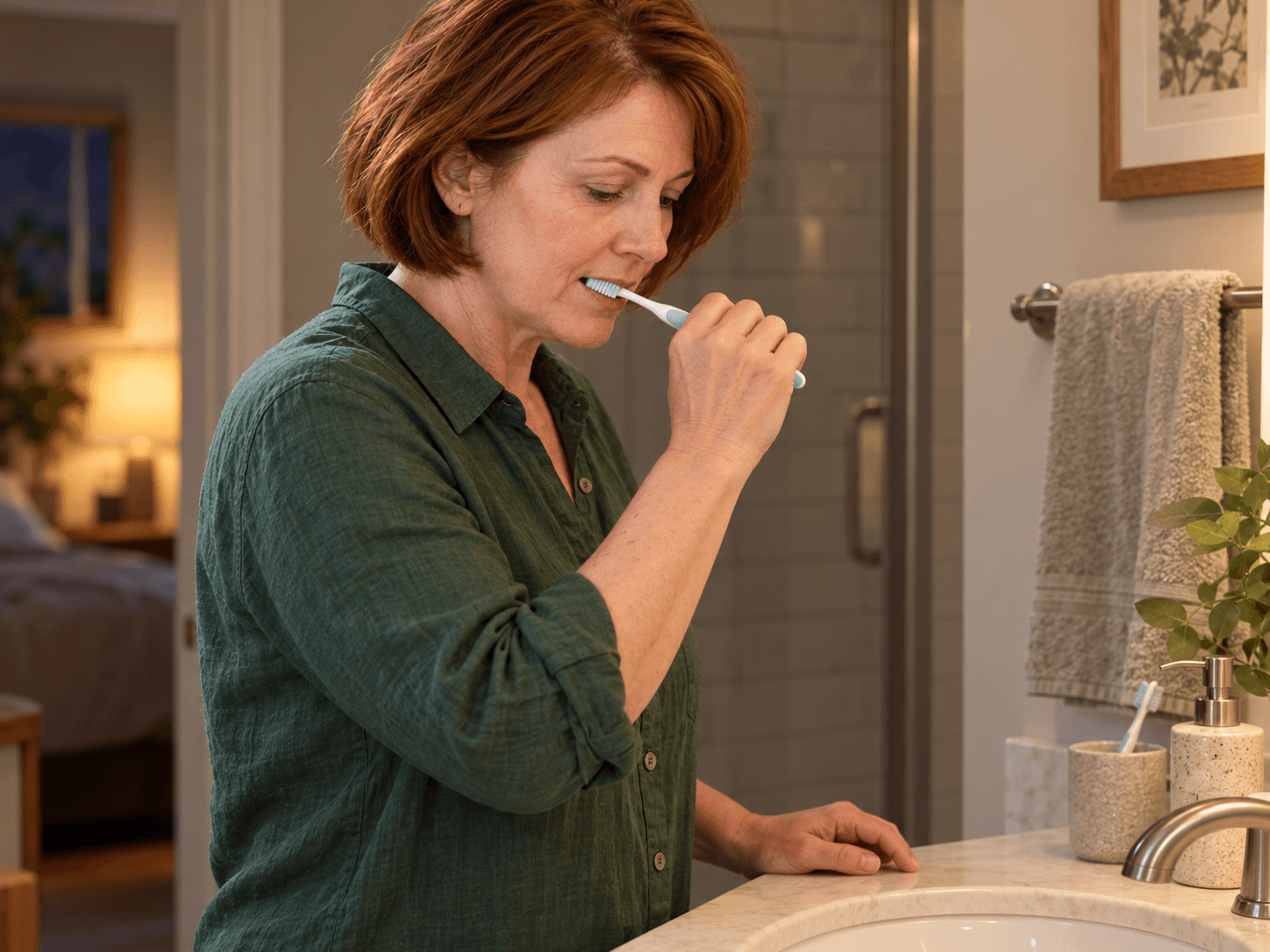
Try the demonstrated hand position while you are still at the appointment. 'I can do it on the front teeth, but cannot reach this back one' is useful information. The team can see the actual difficulty and suggest a suitable approach. Keep the cleaning instructions with the date of your fitting visit so they are easy to find later.
A change in fit deserves a call
Contact the clinic if the temporary rocks, comes off, breaks, or the bite feels noticeably different. Report worsening pain rather than assuming it is part of having a temporary. If the crown comes away, keep it and ask the dentist what to do next; do not use household glue. The separate guide below covers a crown that has already come off.
At the final fitting, tell the dentist about anything that happened between visits, even if it settled. You can ask how the final crown will be checked for fit and bite, and what cleaning will change afterward. There is no useful universal expiry date for a temporary: its planned duration belongs to your treatment, and a delayed fitting should be discussed with the clinic.