Can a Crowned Tooth Still Get a Cavity?
A crown covers a natural tooth; it does not remove its need for care. Learn why the edge matters and what changes deserve a dental examination.
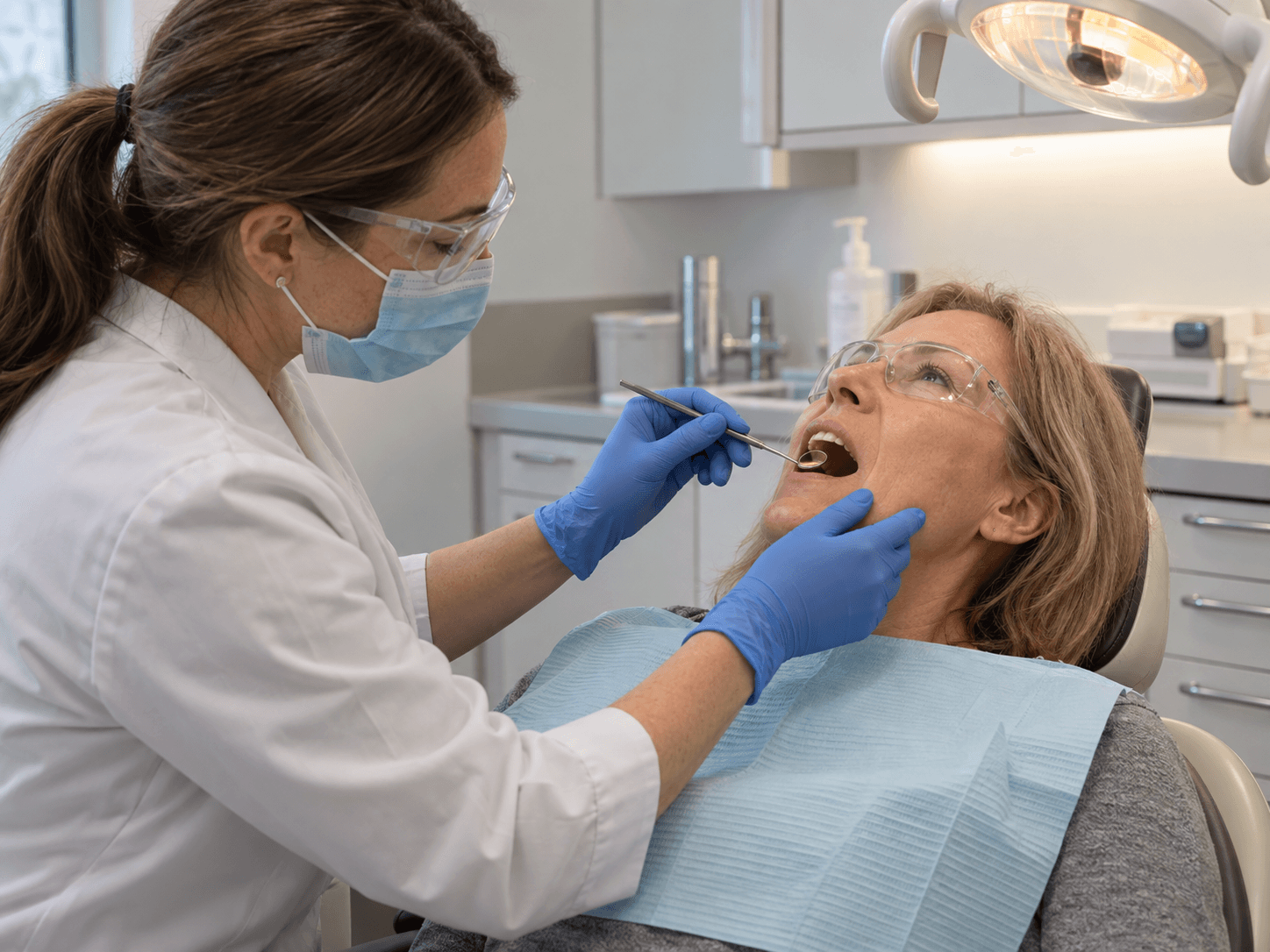
Yes. A crown can protect and restore a natural tooth while the remaining tooth is still susceptible to decay. The ceramic or metal cap itself does not get a cavity. The concern is the tooth at or beneath its edge. This article concerns crowns on natural teeth; an implant crown sits on a different supporting structure.[1]
Where the crown meets the tooth
A crown fits over a prepared tooth. Its margin is the boundary where the restoration meets tooth structure. An unsuitable fit can allow bacteria to collect and contribute to decay. A crown therefore needs both daily cleaning and professional review, even if its visible surface still looks shiny and intact.[1]
At your next examination, ask the dentist to show you where that margin sits. If floss catches or shreds in the same place, or food has begun collecting beside the crown, mention it. Those observations are reasons to examine the area, not proof that there is decay or that the entire crown has failed.
What the examination can clarify
Decay may be painless in its early stages. Diagnosis relies on the clinical findings and sometimes X-rays, rather than appearance or pain alone. Tell the dentist when the crown was placed, whether it has ever come loose and what has changed. If you have moved offices, previous records may help the comparison.[3]
Useful questions are specific: 'Is the problem in the crown, the tooth underneath, or the gum beside it?' and 'What can you tell from today's examination?' Ask to see the evidence and hear any uncertainty. A photograph of a dark line is not enough to decide whether a crown should be replaced.
The repair depends on what remains
The choices depend on the location and extent of the damage and whether the tooth can be restored predictably. Ask what would be repaired, whether the existing crown could stay, and what might only become clear after removing it. If a replacement is proposed, understand the reason and the alternatives before treating the crown's age as the diagnosis.

A crown does not have a universal expiry date. Nor does a long-lasting crown justify ignoring a new symptom. Persistent pain, a loose crown or a damaged edge deserves a call to the dental office. The useful question is how this restoration and tooth are functioning now.[1]
Care includes the edge
Brush twice daily with fluoride toothpaste, clean between the teeth and follow your recall plan. Leeds Teaching Hospitals also advises limiting the frequency of sugary food and drink. Ask for a demonstration if the crown changes how a brush or interdental aid fits. Cleaning the easy, shiny surface while missing the margin leaves the most relevant part of the task unfinished.[2]