The Last Step of Brushing: Spit, Then Stop
Rinsing immediately after brushing washes away concentrated fluoride. A small change at the sink can make the end of your routine simpler.
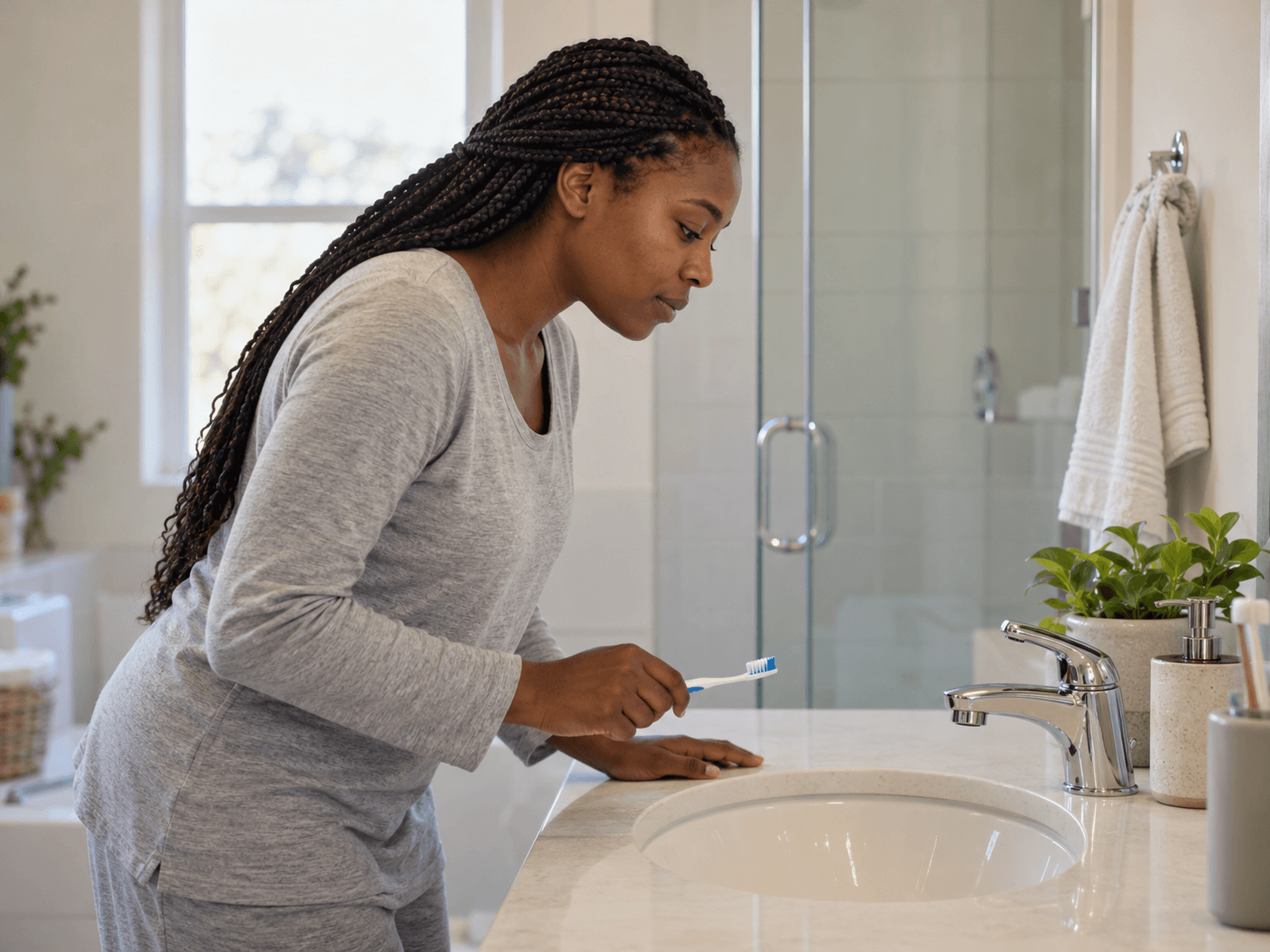
For ordinary adult brushing with fluoride toothpaste, finish by spitting out the excess rather than immediately rinsing with water. NHS guidance explains that rinsing washes away and dilutes the fluoride left on the teeth. You can rinse the toothbrush itself without filling a cup to rinse your mouth.[1]
A habit that happens almost automatically
The cup may be in your hand before you have thought about it. Put it aside before starting if that helps interrupt the routine. At the end, spit out the excess paste, clean the brush and return it to its holder. Leaving the remaining fluoride in place does not mean swallowing toothpaste or holding a mouthful of foam.
Move mouthwash to another time
A rinse immediately after brushing can wash away the toothpaste's fluoride even when the rinse itself contains fluoride. Dorset County Hospital advises using mouthwash at a different time from brushing. If a rinse is part of your plan, ask when it belongs; an after-lunch habit may be easier to separate from morning and bedtime brushing.[2]
Check why you are using the mouthwash as well. A product recommended for a particular problem may have its own instructions. Keep those with the bottle so you do not have to guess whether the advice was temporary or ongoing. This general routine should not replace directions given after surgery or for a specific prescribed treatment.
Make one change you can repeat
You do not need to redesign the whole bathroom. Try changing only the final rinse step and notice whether the routine is comfortable. If toothpaste leaves burning, persistent irritation or an unpleasant sensation that makes brushing difficult, discuss the product with a dental professional. The aim is a routine you can keep, with clear instructions for any special products you use.