When the Dentist Suggests Stronger Toothpaste
Higher-fluoride toothpaste needs a clear, product-specific plan. Learn what to check about strength, daily use, swallowing and storage in Canada.

A recommendation for higher-fluoride toothpaste should come with more than a product name. You need to know why it suits you, how to use that particular formulation, and when the plan will be reviewed. This is especially useful if the tube looks much like the ordinary toothpaste already shared beside the sink.
Check the exact strength and product
Some Canadian high-fluoride toothpastes contain 5,000 parts per million of fluoride. A label may also express the ingredient as 1.1% sodium fluoride; those figures describe the same formulation in different ways, not interchangeable percentages. The Canadian manufacturer information for PreviDent 5000 Plus is one example. Product names and directions still need to be checked individually.[2]
Do not assume an American page calling a toothpaste 'prescription only' describes Canadian availability. Health Canada lists certain high-fluoride products in its Licensed Natural Health Products Database. Ask your dentist or pharmacist for the exact Canadian product and instructions. Availability is separate from whether a product is appropriate for your own mouth.[1]
Put the directions into your actual day
Ask whether it replaces your usual toothpaste at a particular brushing, how much to use, and what to do about eating, drinking or rinsing afterward. Do not combine directions from two similar-looking tubes. If you also use a fluoride rinse or receive professional treatments, include those in the question so the whole routine is clear.
For example, tell the pharmacist: 'I brush before breakfast and before bed. Where does this fit?' That produces a more usable answer than trying to remember a general explanation at the checkout. Keep the carton or photograph its instructions, particularly if the small print on the tube is difficult to read.
Swallowing and storage matter
Mention difficulty swallowing or reliably spitting out toothpaste before starting. The Health Canada product record includes swallowing-related restrictions and advises keeping the product out of children's reach. A recommendation for one adult is not a household recommendation. Check age restrictions and supervision requirements for the exact product rather than sharing it with a child.[1]
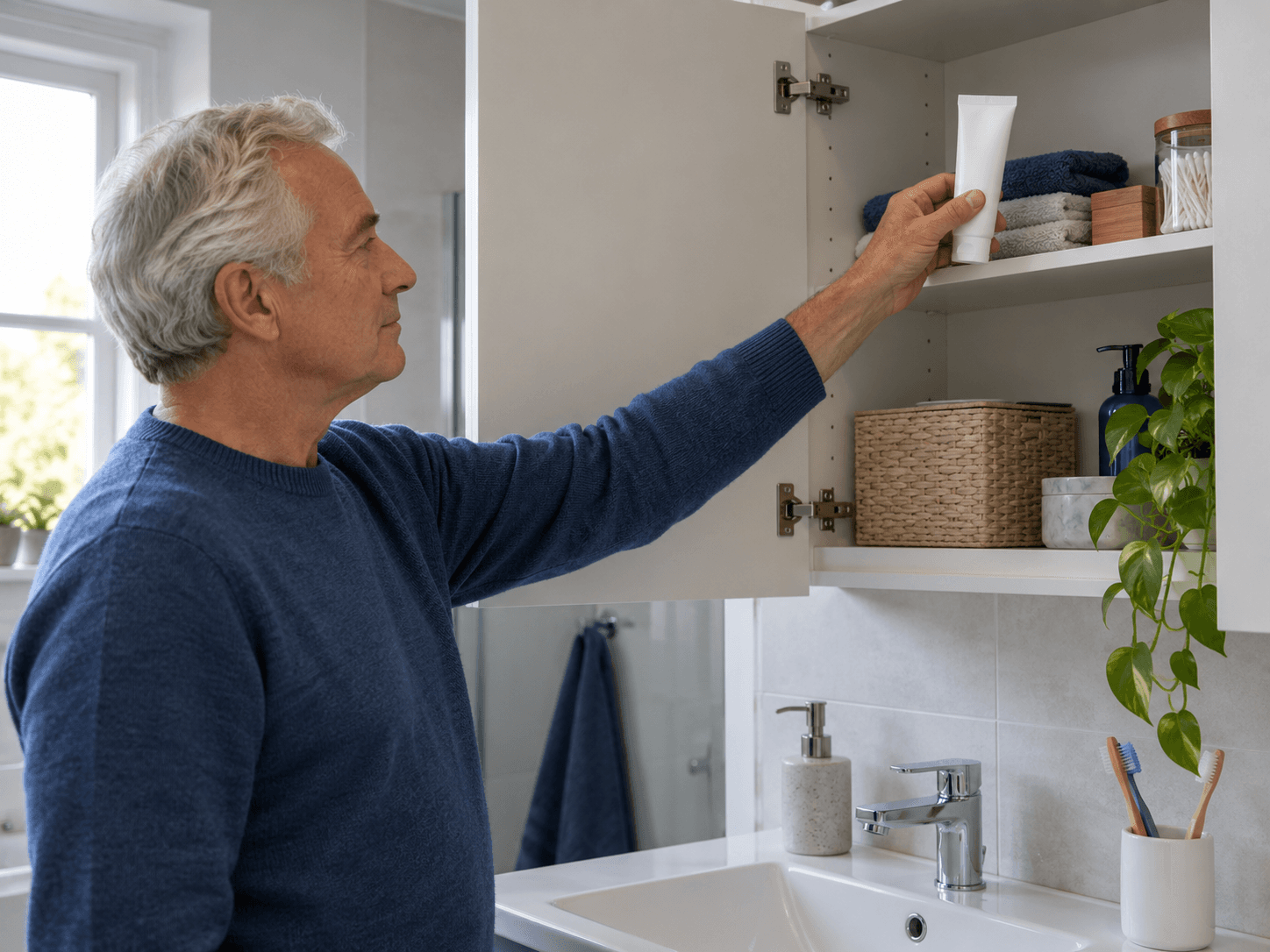
Agree on the review point: what finding will the dentist reassess, and when? Keep a note of any difficulty using the product so the routine can be adjusted. A stronger tube is most useful when you understand its purpose and can follow its directions consistently.