Use a Disclosing Tablet to Find the Spots You Miss
Temporary dye can make plaque easier to see. Use it as feedback on your brushing route, with the product's instructions and gentle cleaning.
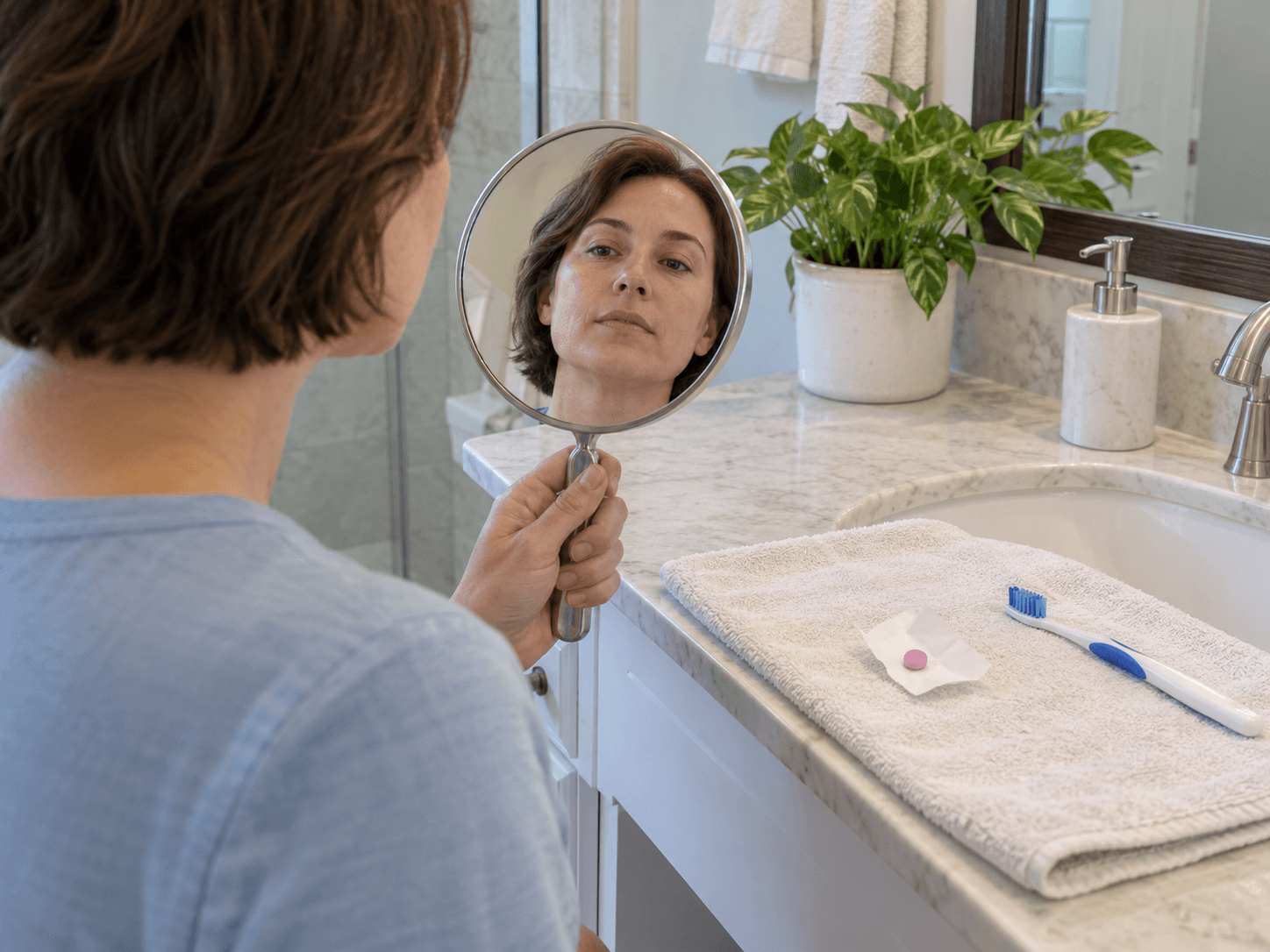
A disclosing tablet temporarily colours plaque so you can see areas your brushing has missed. The useful result is a small adjustment to your technique, not a perfect-looking mouth for a photograph. Choose a suitable product, read its instructions and check any age or ingredient restrictions before using it.
Prepare for a little colour
Use a mirror and protect clothing and nearby surfaces because the dye can stain. Choose a time when a temporarily coloured tongue or lips will not be inconvenient. Royal Devon's patient information specifically warns about staining clothes and the basin. Keep the product instructions beside you for the first attempt.[2]
The Leeds patient leaflet describes chewing the tablet, spreading the colour across the teeth with the tongue, spitting it out and rinsing away excess dye before looking in the mirror. Do not swallow the tablet or dye. Follow your own product's amount and timing rather than assuming every tablet is used identically.[1]
Notice a pattern before brushing again
Look for places where colour remains on the teeth: perhaps the tongue side of the lower teeth or a back corner you hurry past. Identify one or two areas you can reach more deliberately. A photo kept privately for your dental appointment can help explain an awkward spot, but you do not need to grade every tooth.
Brush gently to remove the coloured plaque and check the result as the instructions direct. If an area remains difficult, ask for a demonstration rather than scrubbing it harder. Colour is feedback about where material remains; it does not tell you whether a cavity is present, how deep a gum pocket is or whether a tooth needs treatment.[1]
Take the useful change into tomorrow
A one-off test matters less than the movement you learn from it. Try changing the order you brush so the awkward surfaces are included before you are ready to stop. At your next visit, show the hygienist the area and the brush you use. The exercise has done its job when it helps you clean more reliably without making your mouth sore.