My Toothbrush Looked Exhausted
A fictional bathroom discovery starts a conversation about gentle pressure, worn bristles and asking someone to check the way you actually brush.
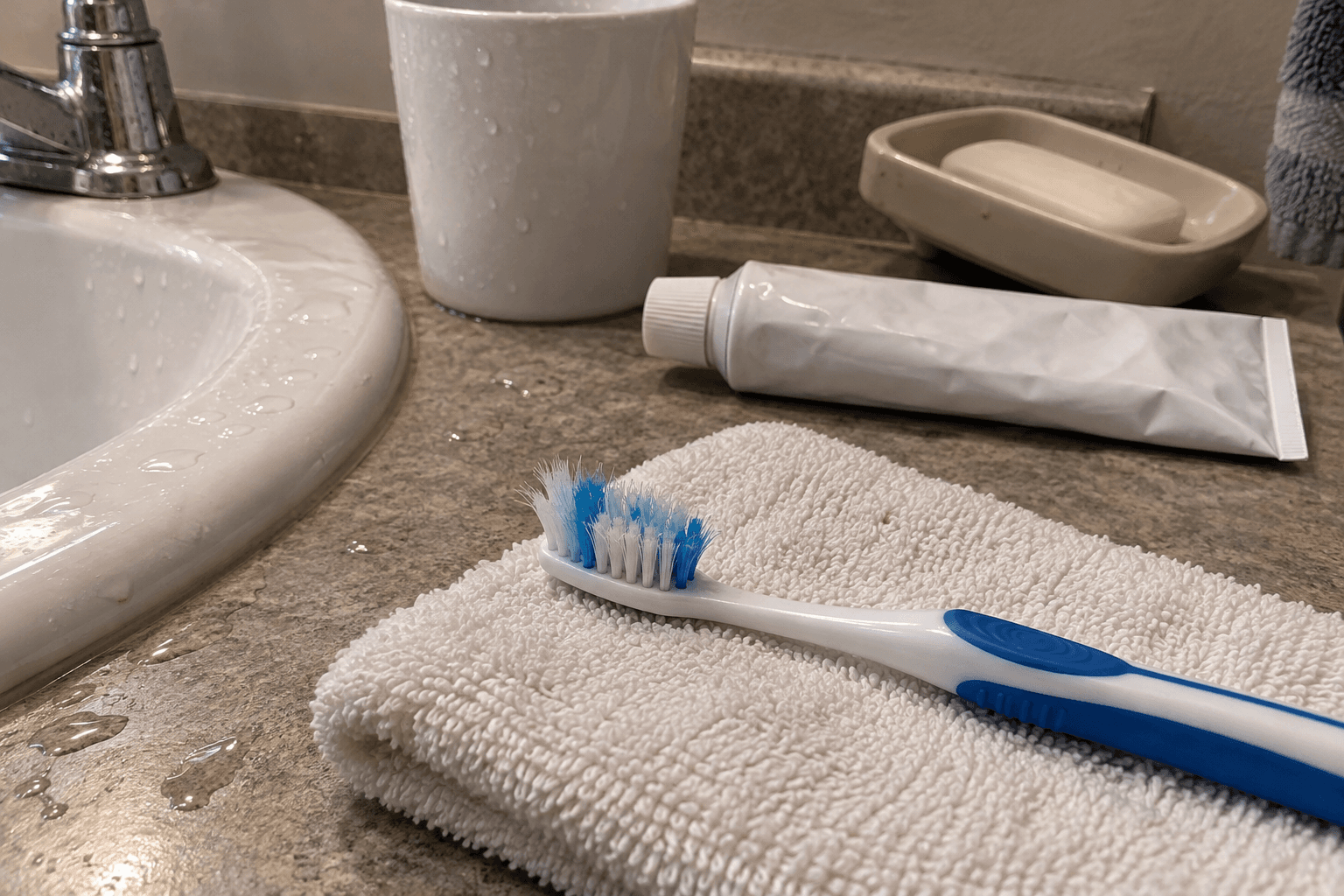
The bristles had spread out
The toothbrush was only a few weeks old and already looked as though it had been used to scrub a bicycle. I had always thought a firm hand meant a thorough clean. Apparently I had brought the same enthusiasm to teeth and burnt frying pans.
I could not tell from the brush whether I had damaged anything. What I could tell was that buying a harder one to resist the pressure would be a strange way to answer the question.
Technique was worth checking
The American Dental Association recommends soft bristles and gentle pressure to reduce the risk of gum injury. It advises replacing a brush when bristles become matted or frayed, even if that happens before the usual replacement interval.[1]
I took a photo of the brush and put a new soft one beside the sink. At my next visit I wanted to demonstrate how I normally brushed, including the impatient part at the back. Asking whether I was doing it correctly seemed more useful than collecting another list of products.
I also noted a sensitive spot instead of deciding pressure must be its only cause. The dentist would need to assess it. A worn brush could start a conversation; it could not finish an examination.
Less force took attention
That evening I caught myself gripping the handle like a screwdriver. I loosened my hand and slowed down. It felt unfamiliar, which probably explained why simply being told to be gentle had never stayed with me.
The frying pan remained a separate matter. It was not getting the new toothbrush.
Sam