Fluoride Varnish Is an Adult Conversation Too
A fluoride treatment can be recommended for an adult at risk of decay. Understand the purpose, the application and the aftercare questions to ask.
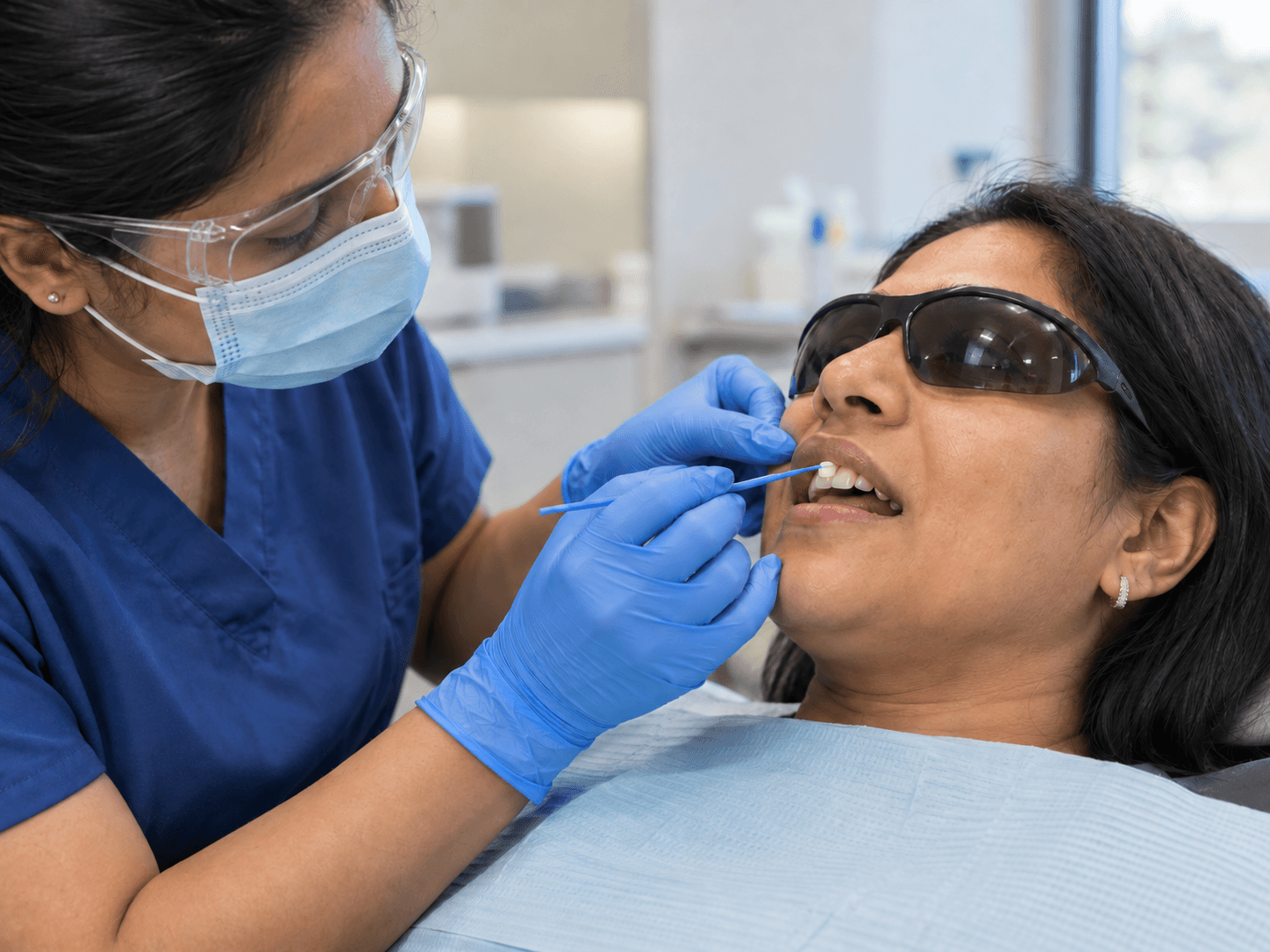
You remember fluoride treatments from childhood, so the suggestion at an adult appointment catches you off guard. The useful question is why it is being recommended for your teeth now. Health Canada describes professionally applied fluoride varnish as an option for people at risk of tooth decay. Age alone does not settle that decision.[1]
Ask what the treatment is meant to protect
Fluoride helps strengthen tooth surfaces and supports remineralization. Varnish delivers fluoride directly to the teeth through a professional application. Ask the clinician to connect the recommendation to your examination: is there an early lesion being managed, an exposed root surface, or a change in your overall risk? A specific explanation is easier to act on than 'extra protection.'[1]
Tell the team about previous reactions to dental products before application. If the taste or the sensation of something on your teeth is difficult for you, say so beforehand. You can also ask which surfaces will be treated and how the application fits with any other work that day.
Get the aftercare for the product used
Varnish can leave a temporary coating or a different feel on the teeth. Instructions about eating, drinking and brushing depend on the product and the treatment plan. Ask the team for instructions for the actual varnish used. A waiting period from someone else's appointment should not be copied onto a different product without checking.[2]
Before you leave, get answers to three practical questions: when can I eat and drink, when should I brush, and should I change any additional fluoride products today? If you have a lunch meeting or need to take medicine with food, mention the timing before treatment. A written instruction or a phone photo of the aftercare sheet saves trying to reconstruct the conversation later.

Keep the rest of the plan clear
Ask when the treated areas will be reviewed and whether another application is expected. Record that alongside the home-care advice rather than treating the varnish appointment as the whole prevention plan. If the reason for recommending it remains unclear, ask for the finding that led to the suggestion and the other reasonable options. You should leave understanding both what was applied and what happens next.