The Kitchen Cupboard Is a Poor Whitening Guide
Acidic scrubs and rough powders can harm tooth surfaces. Check the evidence and discuss a suitable whitening approach before trying a social-media recipe.
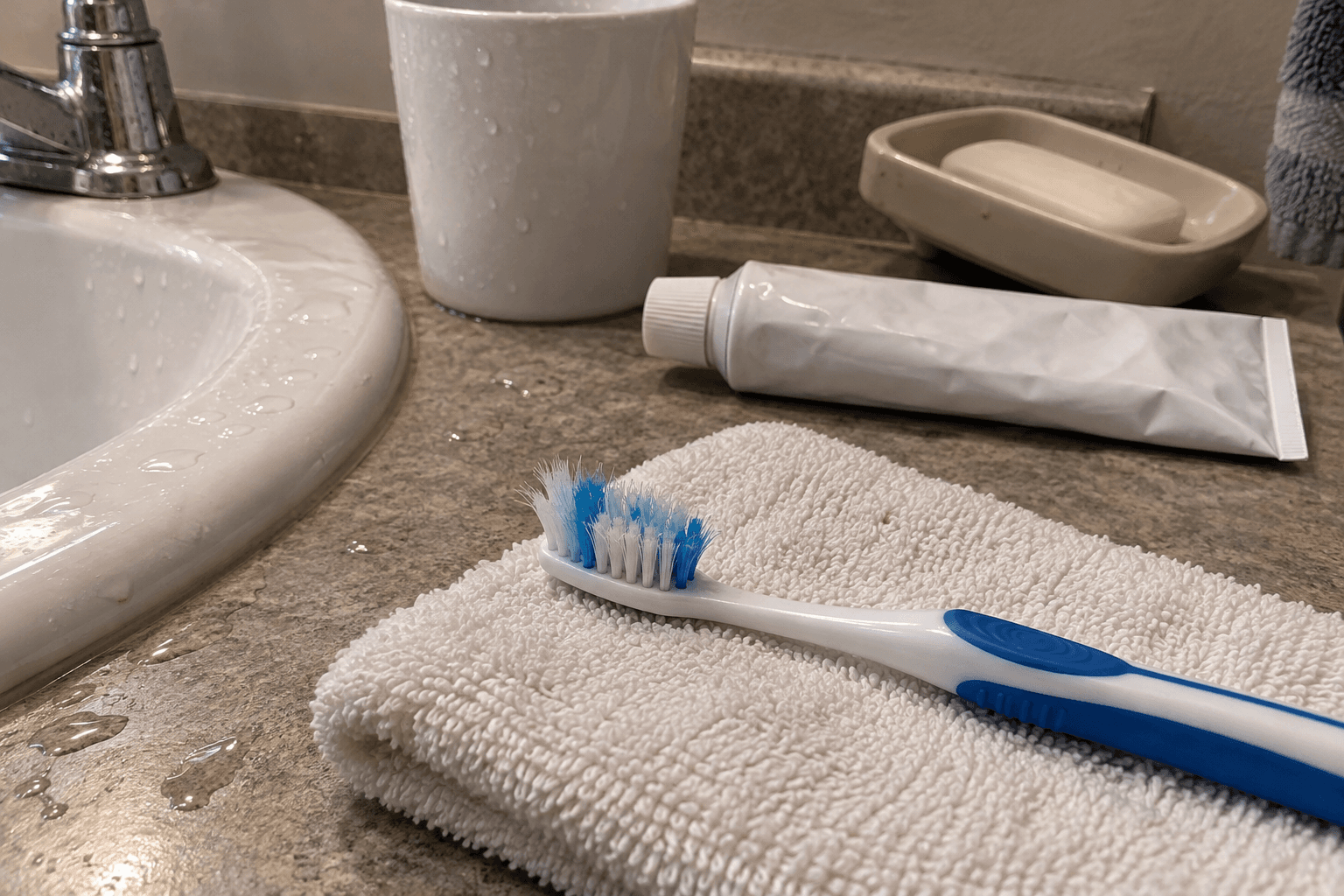
Natural does not establish safety
The ADA warns that prolonged acid contact from ingredients such as lemon or vinegar can wear enamel, and that abrasive scrubs may damage tooth surfaces. Its review also questions evidence for charcoal whitening and oil-pulling claims.[1]
A before-and-after video rarely shows the full method, lighting or longer-term effects. Avoid making a dental product from household ingredients because a short clip looks convincing. Your enamel is not something you can replace by buying a gentler recipe next time.
Identify the change you want
Ask a dentist whether the concern is surface stain, the natural shade, a restoration or a tooth that needs assessment. That distinction helps determine whether cleaning, whitening or another approach is appropriate.
Bring the product or recipe you are considering and ask about its evidence and risks. Keep fluoride toothpaste and gentle cleaning as the routine. If you have already used something that caused pain or irritation, stop it and describe the symptoms rather than scrubbing harder to finish the experiment.