Invisalign vs. Braces: Which Is Right for You?
Two ways to move. One goal.
This is not beauty versus brains. Invisalign and braces are both serious orthodontic tools, and both can create excellent results in the right case. The real question is which one fits your bite, your life, and your tolerance for tiny daily rules.
Braces are the relentless workhorse. Metal brackets and an archwire apply steady pressure, and the wire is adjusted periodically, often every four to six weeks, to guide movement. They stay on duty around the clock, usually for 18 months to three years depending on how much work the bite needs.
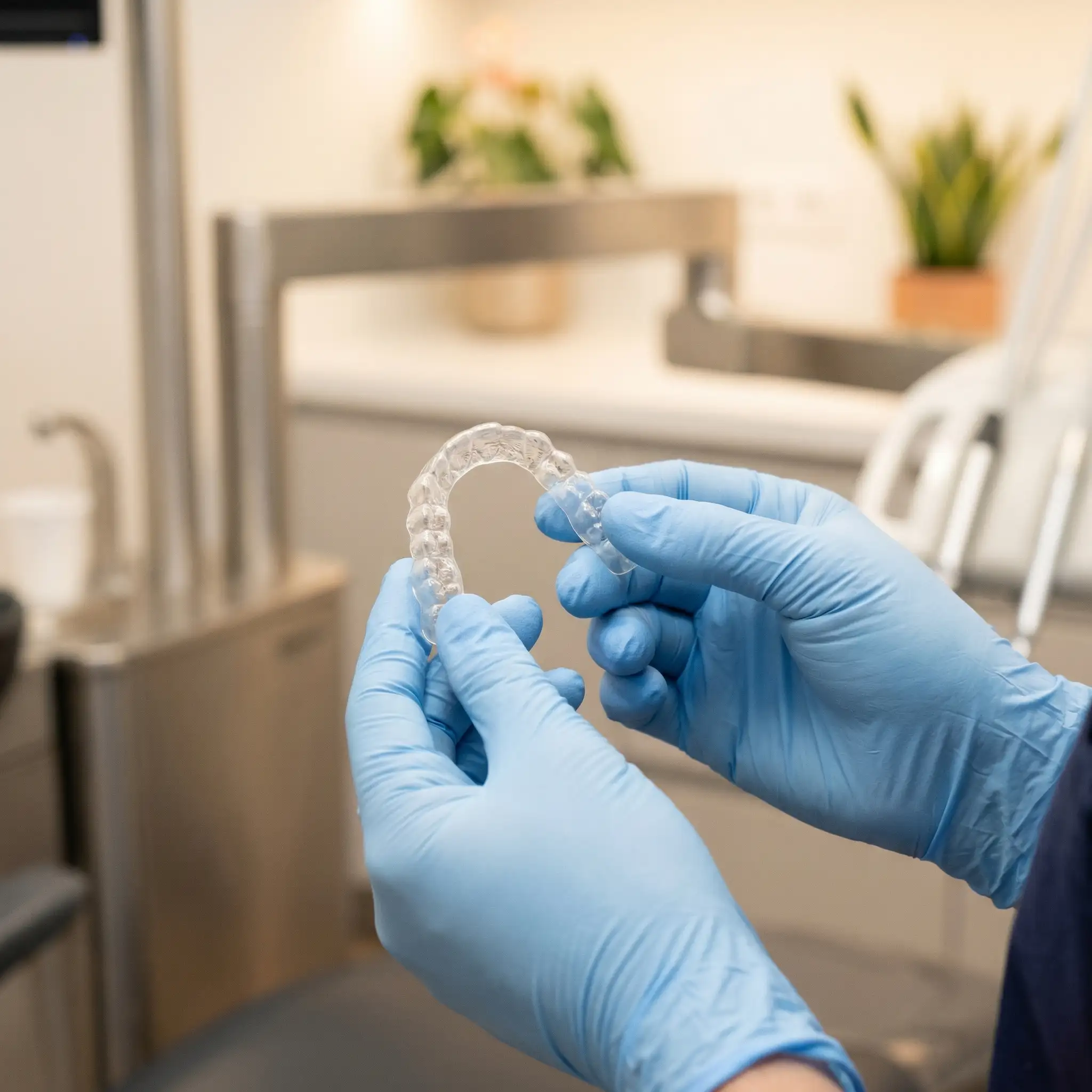
Invisalign takes the quieter route. A sequence of custom clear aligners fits over the teeth, with each set making a small move before the next takes over. Aligners are commonly changed every one to two weeks and worn for 20 to 22 hours a day. Many treatments land between 6 and 18 months, but complex cases can take longer because teeth do not care about your calendar.
Let us talk looks
Let us be honest: looks matter. Clear aligners are far less noticeable than metal braces, which can feel deliciously low-key at work, school, dinner, or a close-up photo. Braces are visible, although ceramic brackets can soften the effect. There is nothing vain about wanting treatment that does not introduce itself before you do. It just cannot outrank what your teeth actually need.
Neither option is a spa day. Teeth under pressure can feel sore. Brackets and wires may irritate cheeks or lips, and a broken wire or loose bracket can demand a repair. Aligners have smooth edges and come out when needed, but a fresh tray can still feel tight. Your teeth know they are being moved, even when nobody else does.
Freedom versus discipline
Aligners offer freedom, then demand discipline in return. You can remove them to eat and clean your teeth normally, but leaving them on the nightstand will stretch the timeline. Braces are gloriously non-negotiable: they keep working without a motivation speech, but hard or sticky foods become a bad romance and cleaning around the hardware takes more effort.
Here is where the glossy marketing leaves the room and biology gets the final vote. Invisalign can treat many cases involving crowding, spacing, and bite problems, but severe jaw discrepancies or complex tooth movements may still favour braces. At Novae, we use a 3D scan and ClinCheck planning to see what aligners can realistically do. If braces are the stronger move, we will say so.
The money question, without the dance
Cost deserves a straight answer, even when the answer is: it depends. Fees for aligners and braces can overlap, with case complexity and treatment length doing most of the talking. Insurance may bring age rules or a lifetime orthodontic maximum. Get the written estimate, check the plan, and make the decision with the full number in front of you.
For teens, the honest question is not which option looks cooler. It is whether those aligners will be worn as directed on an ordinary Tuesday when nobody is watching. Fixed braces remove that decision, but demand careful cleaning around brackets and wires. Habits matter almost as much as hardware.
We are not here to sell you the prettier box. We are here to choose the plan that works on paper, in your mouth, and in real life. Bring us your questions and your wish list. We will bring the scan, the clinical truth, and absolutely no need to pretend one option wins for everyone.