Why Does This Tooth Look Longer?
Gum recession exposes part of a tooth root. Learn what an assessment checks, why brushing is only part of the story and how treatment goals differ.

One tooth seems taller in a photograph. Or the brush catches a sensitive area near the gumline that you had not noticed before. Gum recession means the gum margin has moved away from its previous position, exposing more of the tooth and sometimes the root. The appearance is worth asking about, but it does not tell you the cause or the right treatment by itself.[4]
The toothbrush is not the only suspect
Aggressive brushing can contribute to recession. So can gum disease, naturally thin tissue, the position of a tooth and the shape of nearby tissue attachments. More than one factor may be involved. An assessment should explain what seems relevant in your case instead of assuming every exposed root is proof that you scrub too hard.[1]
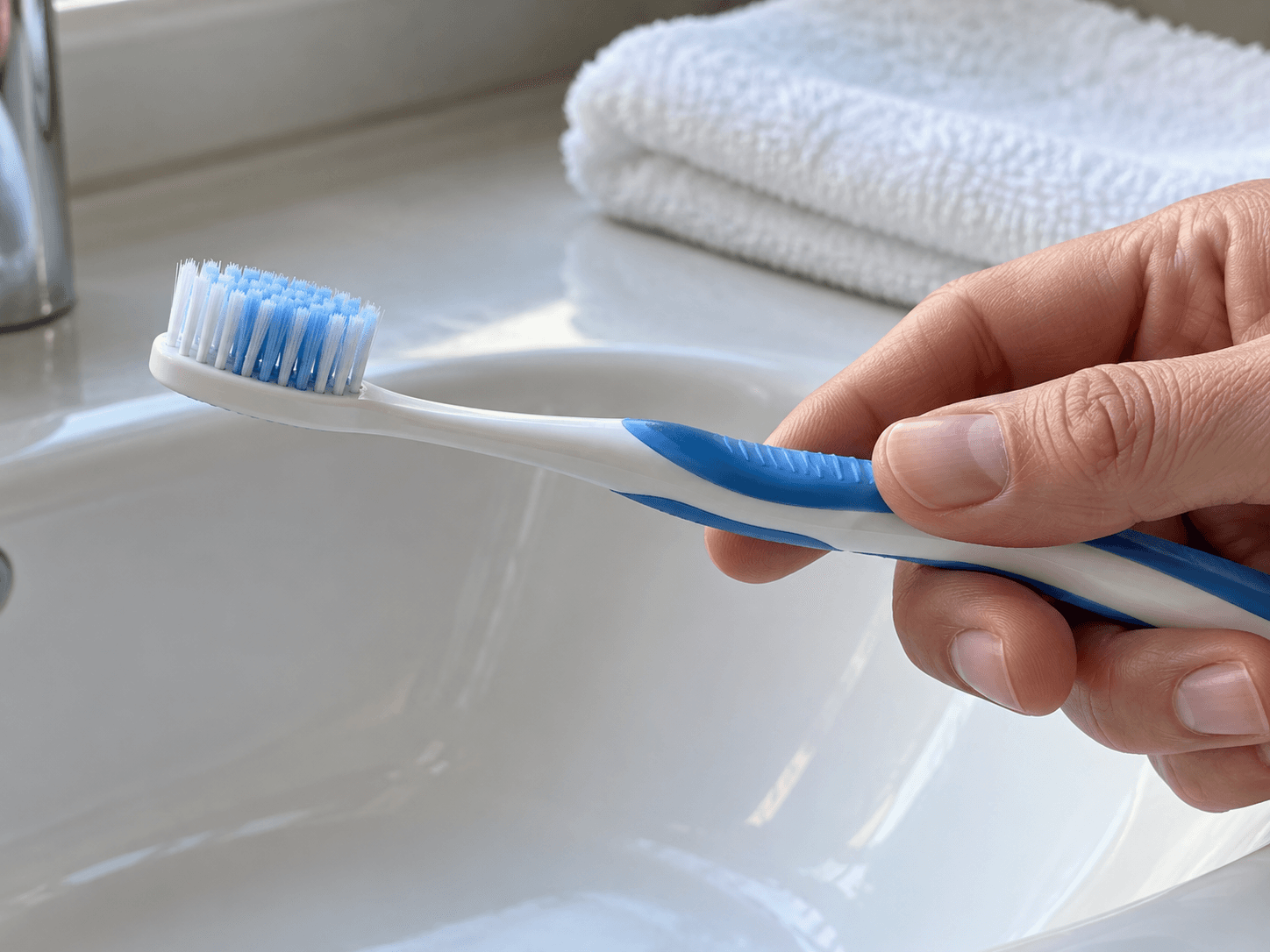
Bring your toothbrush, or a photograph of its head, if you want help with technique. Describe whether you use a manual or electric brush and how you move it. If someone recommends a change, ask them to show you the pressure and angle. 'Gentler' is easier to understand when you can see what it means.
What the examination is trying to establish
The dentist or periodontist can measure recession and examine the surrounding gums. A periodontal assessment may also include pocket measurements, checking tooth movement and the bite, and X-rays to evaluate supporting bone when indicated. Recession and a deep gum pocket are different measurements; ask the clinician to explain both rather than reading one number as a complete diagnosis.[2][4]
A useful question is, 'Do we have an earlier measurement to compare with this?' If not, the current record can become the starting point. Ask whether the finding appears stable, whether there is active inflammation and when it should be checked again. A photograph taken from a different angle every month is much harder to compare than a consistent clinical record.
Match the treatment to the problem
The plan may focus on reducing irritation, treating gum disease, protecting a sensitive root or considering surgery. A desensitizing product can help symptoms in some cases, but it does not regrow the gum. If pain is new or worsening, do not assume that an exposed root explains everything; the tooth itself still needs assessment.[4]
Gum graft surgery uses tissue from the palate or another source to address an exposed root or inadequate gum tissue. Potential goals include reducing sensitivity, improving appearance and limiting further recession. These are goals to discuss, not a promise that every root will be completely covered. Ask what outcome is realistic for the particular tooth.[3]
Leave with a monitoring plan
Before choosing a procedure, ask what happens if you monitor the area, what would make treatment more urgent and which home-care changes matter now. If surgery is recommended, request an explanation of recovery, alternatives and the expected result. If monitoring is recommended, record the next review date. Neither plan should leave you checking the mirror without knowing what change would matter.
The practical outcome is not simply that the tooth looks shorter. It is understanding why the gumline changed, keeping the area clean comfortably and knowing whether the situation is stable. That gives you something useful to do between appointments without buying every product that promises to reverse recession.