How Do You Clean Under a Fixed Bridge?
A fixed bridge needs cleaning beneath its replacement tooth as well as around the supports. Learn what to have demonstrated and when to seek help.
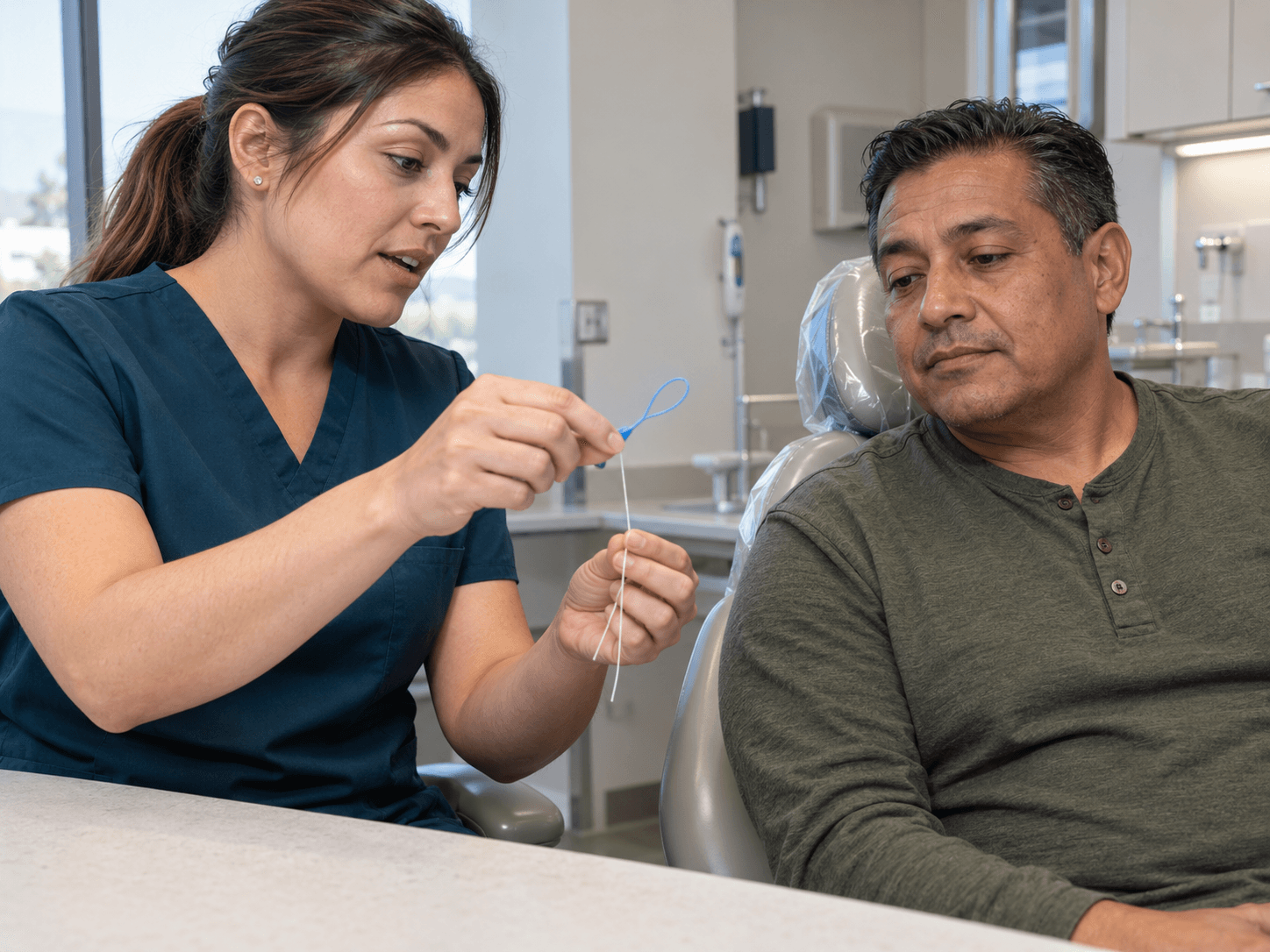
Floss reaches the bridge and stops where the teeth are connected. That does not mean the area underneath can be skipped. A fixed bridge cannot be taken out for cleaning like a removable denture. Its replacement tooth, often called the pontic, needs cleaning underneath, and the teeth or implants supporting the bridge need their own care.[1]
Have the route shown in your own mouth
The Canadian Dental Association describes using a floss threader to clean under and around the artificial tooth. The threader helps bring floss into a space you cannot enter by passing down through a joined contact. Leeds advises cleaning beneath the replacement tooth along the gum line. Ask the hygienist to demonstrate the entry point and gentle movement for your bridge.[1][2]
Practise before leaving. You need to see where the tool enters, where it comes out, and how to guide it without poking the gum. A hand mirror and a slower second demonstration can be more useful than being handed several products. If a particular space does not admit the recommended tool comfortably, do not force it.
Match the tool to the design
A bridge supported by natural teeth and an implant-supported bridge may need different approaches. Some spaces may suit an appropriately fitted interdental brush; others need a floss-based method. Ask exactly which parts you should clean and how the clinician wants you to reach them. The tool should fit your restoration and your ability to use it, not simply be the one that came in a multipack.[1][2]
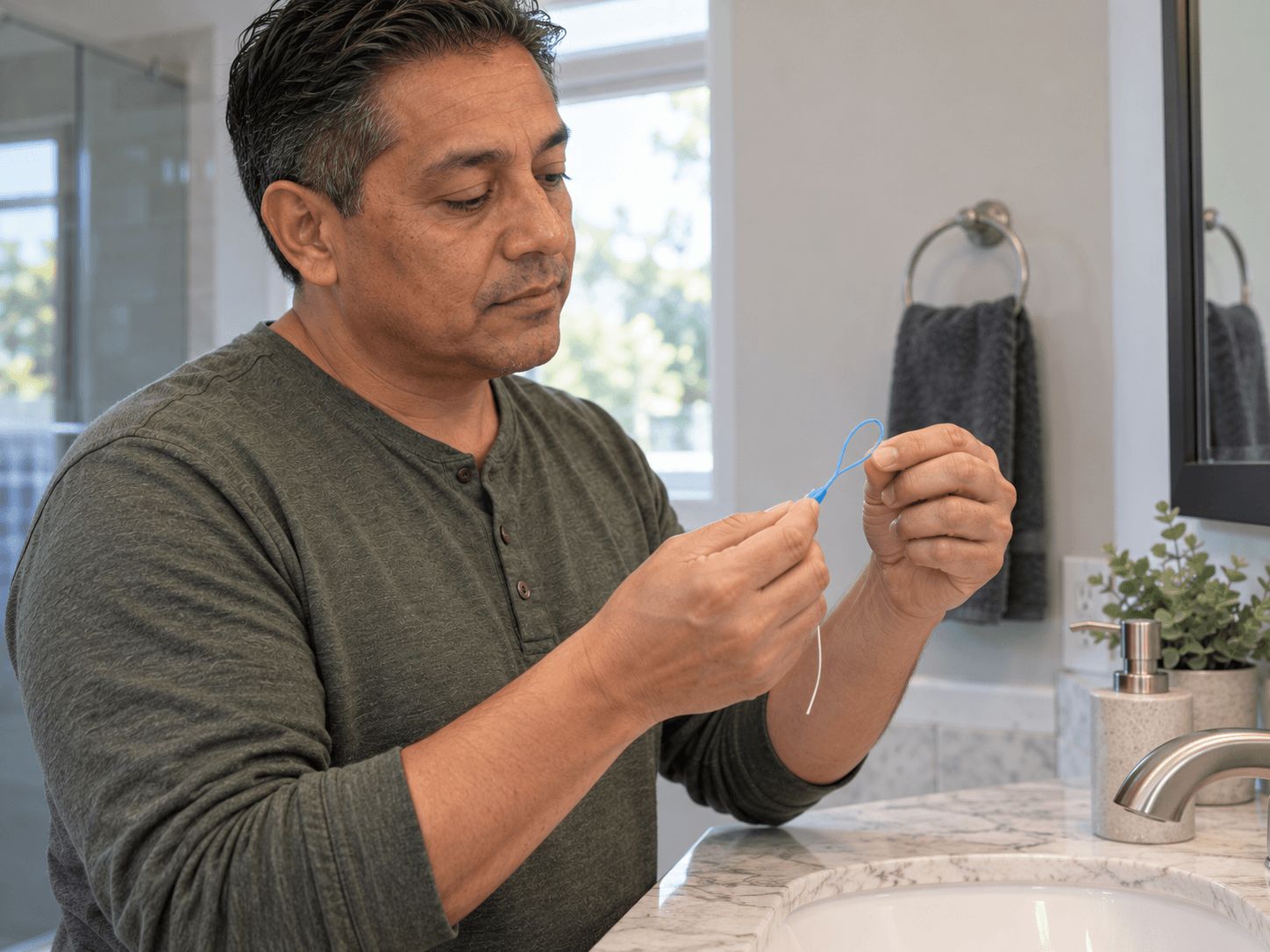
Keep the demonstrated tools where you normally brush. For example, if you only remember the threader after turning off the bathroom light, put it beside the toothbrush instead of in a separate cupboard. That small practical change can make the extra step easier to remember. Keep brushing the accessible surfaces too; cleaning underneath is an addition to that routine.
Report a spot that stays troublesome
Arrange a dental review for persistent bleeding, discomfort, a bad taste or repeated food trapping, especially if something has changed. If floss suddenly snags or the bridge feels loose, describe that rather than pulling harder or using a sharp object to clear the area. The team can check both the fit and the cleaning access.
At maintenance visits, ask the hygienist to watch your technique if you are unsure. A useful update is: 'I can reach underneath from this side, but not around the back support.' That identifies the exact part that needs another demonstration. You should leave with a routine you can reproduce at home, not just the name of a tool.