The Case Finally Made It Into My Bag
A fictional lunch break shows why an aligner routine needs a case, cleaning supplies and an honest conversation about the wear schedule.
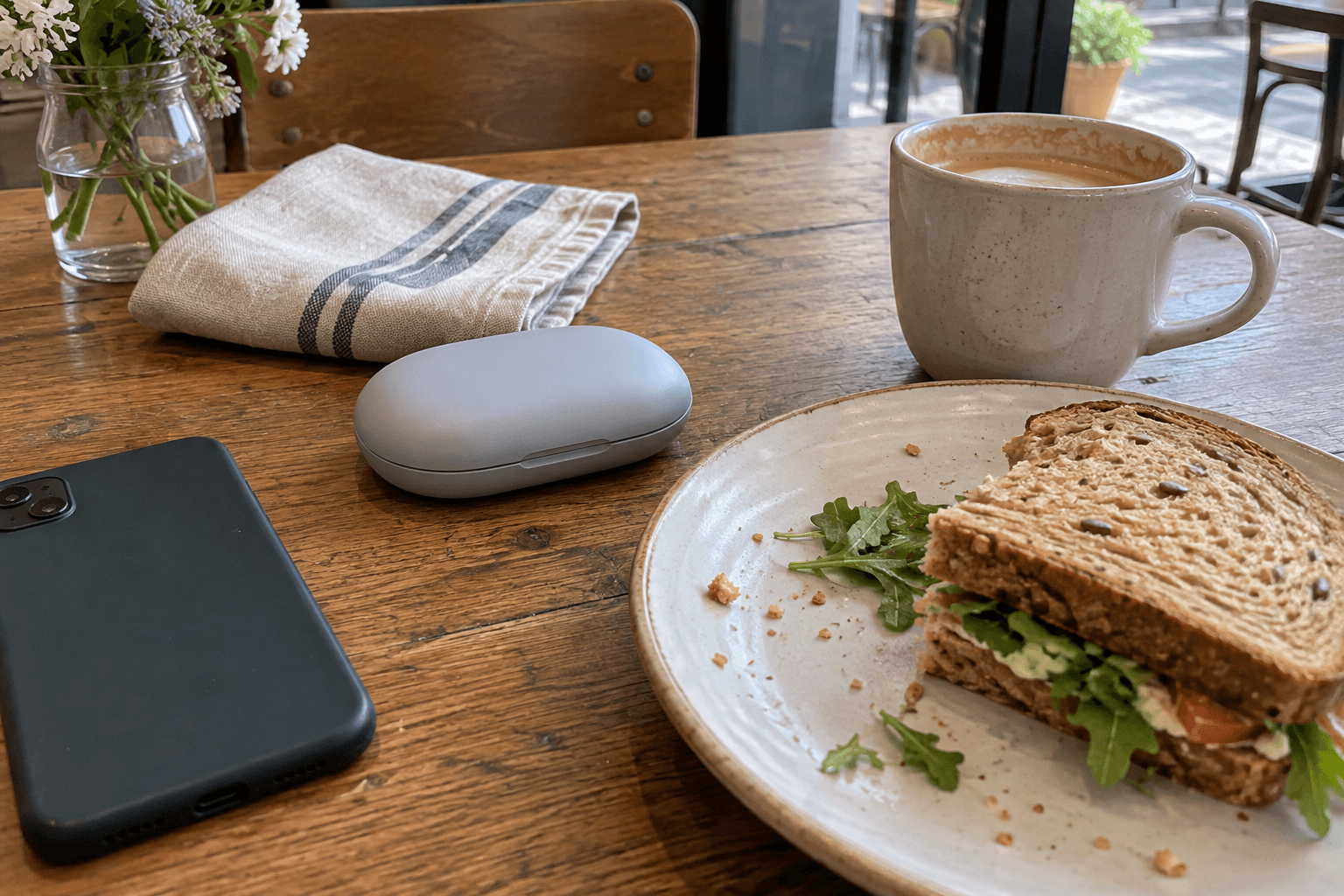
The napkin was a bad system
I had remembered my laptop, charger and the receipt I needed to return a cable. The aligner case was still beside the bathroom sink. At lunch I looked at a paper napkin and briefly considered trusting it with the most inconvenient thing I could lose that week.
That was when I realized my treatment plan had met my actual lunch habits. I ate at different times, drank coffee slowly and sometimes called a bag of crackers lunch while walking between errands. The routine needed more thought than buying a case and owning good intentions.
A practical bag check
The American Association of Orthodontists advises removing aligners for food and drinks other than tap water, then cleaning the teeth before putting them back. It also emphasizes following the prescribed treatment instructions. I needed to make those steps workable outside my bathroom.[1]
I packed the case and a small cleaning kit. I asked my treating team how to handle the days when meals were awkward and how to track the wear schedule they had prescribed. I wanted an answer for a real workday, not an imaginary one with three perfectly timed meals.
I also decided to report missed wear honestly. Quietly changing trays early would not make the missing hours disappear. If the fit or schedule became a problem, that was information the team needed.
A less eventful lunch
The next day the case was on the table before the sandwich arrived. Nothing dramatic happened. I ate, cleaned up and followed my instructions. The napkin performed its usual job and left without taking anything expensive with it.
Dev