Tongue Cleaning Should Stay Gentle
A tongue cleaner is an optional part of oral care, not a reliable cure for persistent bad breath. Avoid scraping a sore or unexplained patch.
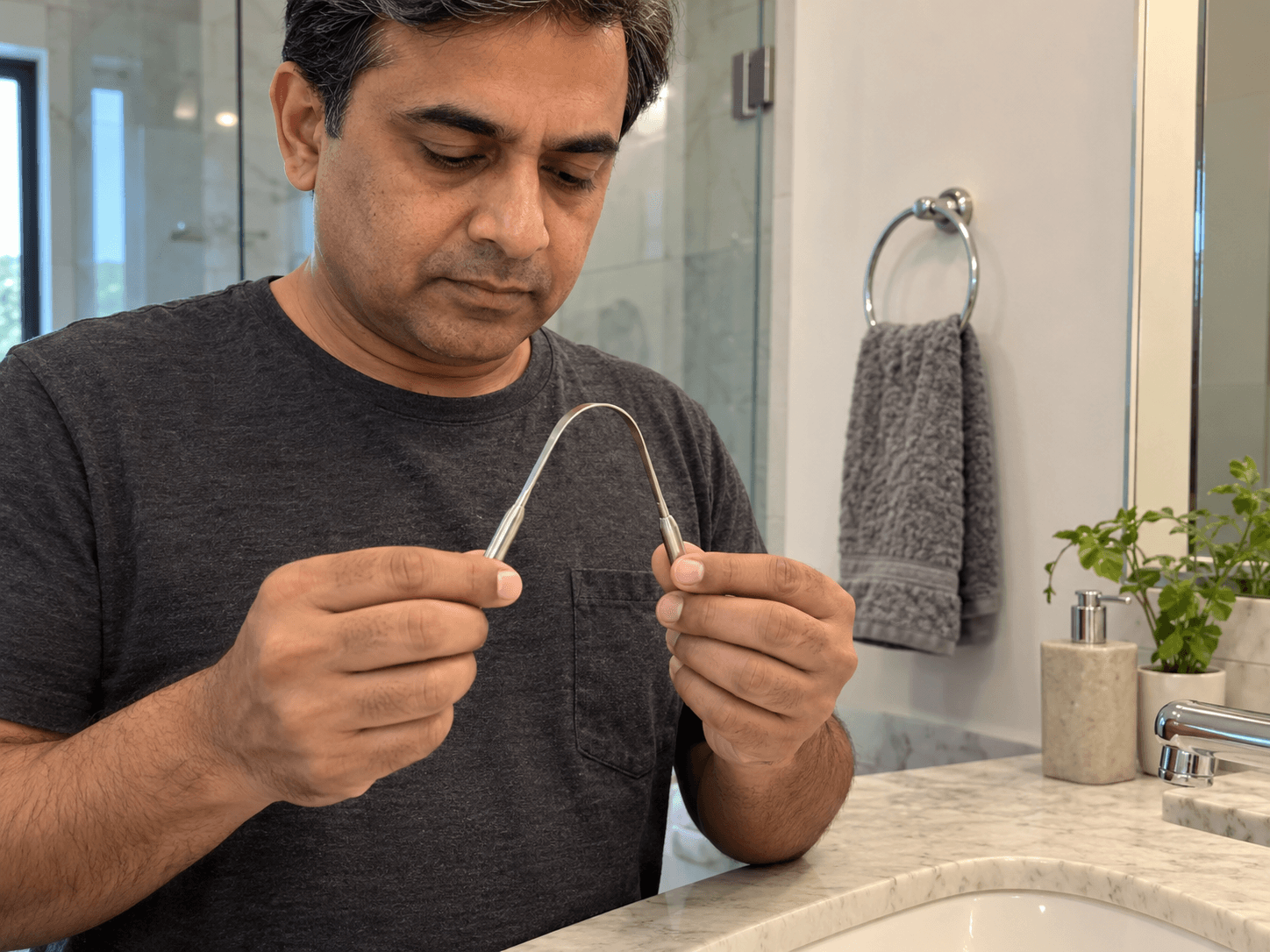
Some people like the clean feeling after gently brushing or scraping the tongue. Others find the extra step unpleasant. The ADA describes tongue cleaning as a matter of preference and notes that evidence does not establish tongue scraping as a way to prevent chronic bad breath. A cleaner tongue is not proof that the cause of persistent breath odour has been treated.[1]
Keep the pressure light
If you choose to clean your tongue, use a suitable tongue cleaner or a soft toothbrush gently. NHS advice includes gentle tongue cleaning in a bad-breath routine and warns against cleaning so hard that the tongue or gums bleed. Follow the tool's instructions and stop if the movement hurts or makes you gag.[2]
You do not need to keep scraping until the tongue matches a photograph online. Do not dig at a patch, use a sharp edge or turn a daily routine into repeated inspection. If reaching farther back is uncomfortable, that is a reason to ease off, not to force the tool deeper.
A persistent symptom needs a different next step
Bad breath that remains after a few weeks of self-care deserves a dental assessment, especially with gum symptoms or tooth pain. A sore tongue, persistent white patches or worsening symptoms also needs professional advice. Scraping cannot establish whether a coating, infection or another condition is present.[2][3]
When describing the problem, separate what you notice: an unpleasant taste, visible coating, soreness, or odour noticed by someone else. Mention when it began and which products you have tried. That history is more useful than arriving with a tongue made tender by an increasingly enthusiastic cleaning routine.