The Filling Is New. The Sensitivity Is Too.
Some sensitivity can follow a filling. An uneven bite, lingering pain or worsening symptoms deserve a call. Here is how to describe the change.

You went in to deal with a tooth and now notice it every time you drink cold water. That can be frustrating, even when the appointment went smoothly. Mild temporary sensitivity can follow a filling. The important details are what triggers it, how long it lasts and whether it is improving. You do not have to decide on your own whether the filling has failed.[1]
Separate a brief response from ongoing pain
Recent dental treatment can temporarily irritate the pulp inside a tooth. A short cold response that is settling is different from pain that lingers, grows stronger or starts without a trigger. The AAE recommends review when post-treatment sensitivity persists or worsens. Use the instructions from your treating dentist rather than treating a general recovery estimate as a rule to endure worsening pain.[2]
A useful phone description sounds like this: 'The filling was placed on Tuesday. Cold water hurts for a few seconds, but meals are comfortable and it is less noticeable today.' Or: 'It aches after I finish drinking and woke me last night.' Those examples communicate different patterns without requiring you to diagnose the nerve.
Does that tooth meet first?
If the new filling feels higher than the other teeth, or the tooth hurts when you close together, tell the office. A filling that interferes with the bite may need an adjustment. That is something the dentist checks and performs; it is not a reason to file, grind or repeatedly bite down hard on the filling at home.[1]
Explain whether the bite felt different once the numbness wore off and whether you can chew comfortably. Do not wait until a routine checkup simply because the restoration is new. The team needs to know how the tooth behaves after you leave the chair, when the normal sensations have returned.
Follow the plan for this filling
Ask what the dentist expected given the size and depth of the restoration, and when they want to review continuing symptoms. If they recommend a sensitive-tooth product or pain medicine, check how to use it and whether it is suitable with your health conditions and other medicines. Write down the review date rather than relying on 'give it a while.'
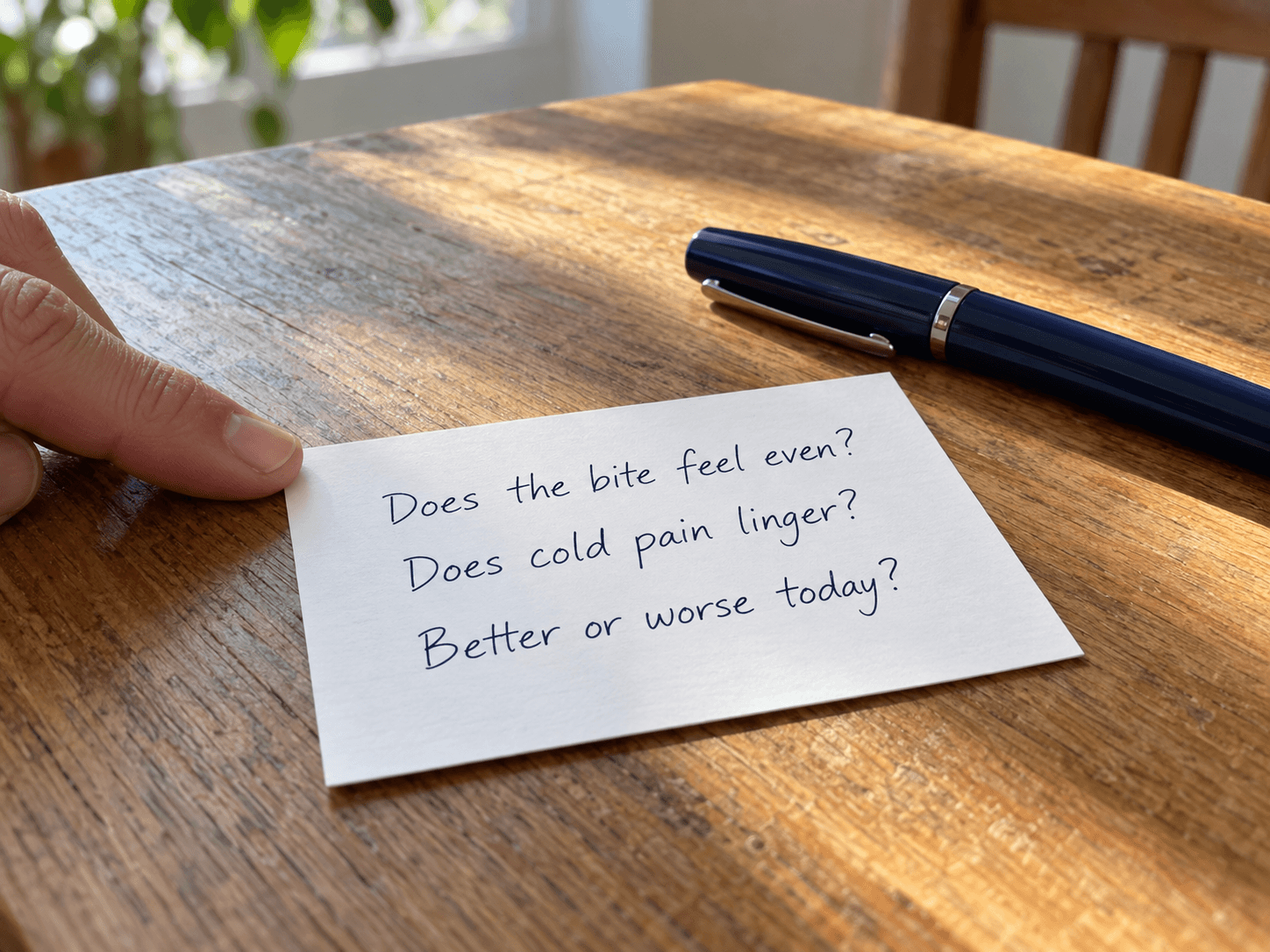
A simple note can keep the conversation focused: the treatment date, the trigger, how long discomfort lasts and whether the trend is better or worse. You do not need to take repeated ice-water tests. Notice what happens during an ordinary day and avoid deliberately recreating a painful sensation.
Call sooner for a clear deterioration
Contact the dentist promptly for severe pain, swelling of the face or jaw, fever, or a broken filling. Intense temperature pain that continues after the trigger has gone also needs reassessment. These symptoms do not establish a diagnosis over the phone, but they are reasons to update the office rather than waiting through a preset number of days.[1]
At the follow-up, ask what was found and what change should follow any adjustment or treatment. If the explanation remains uncertain, agree on the next step and the time to reassess. A useful aftercare plan should leave you knowing what to watch, who to call and when the tooth needs another look.