What Does the Dentist Learn From a Cold Test?
Cold and electric pulp tests help investigate a tooth, but one response is not a diagnosis. Learn why comparisons and your symptom history matter.
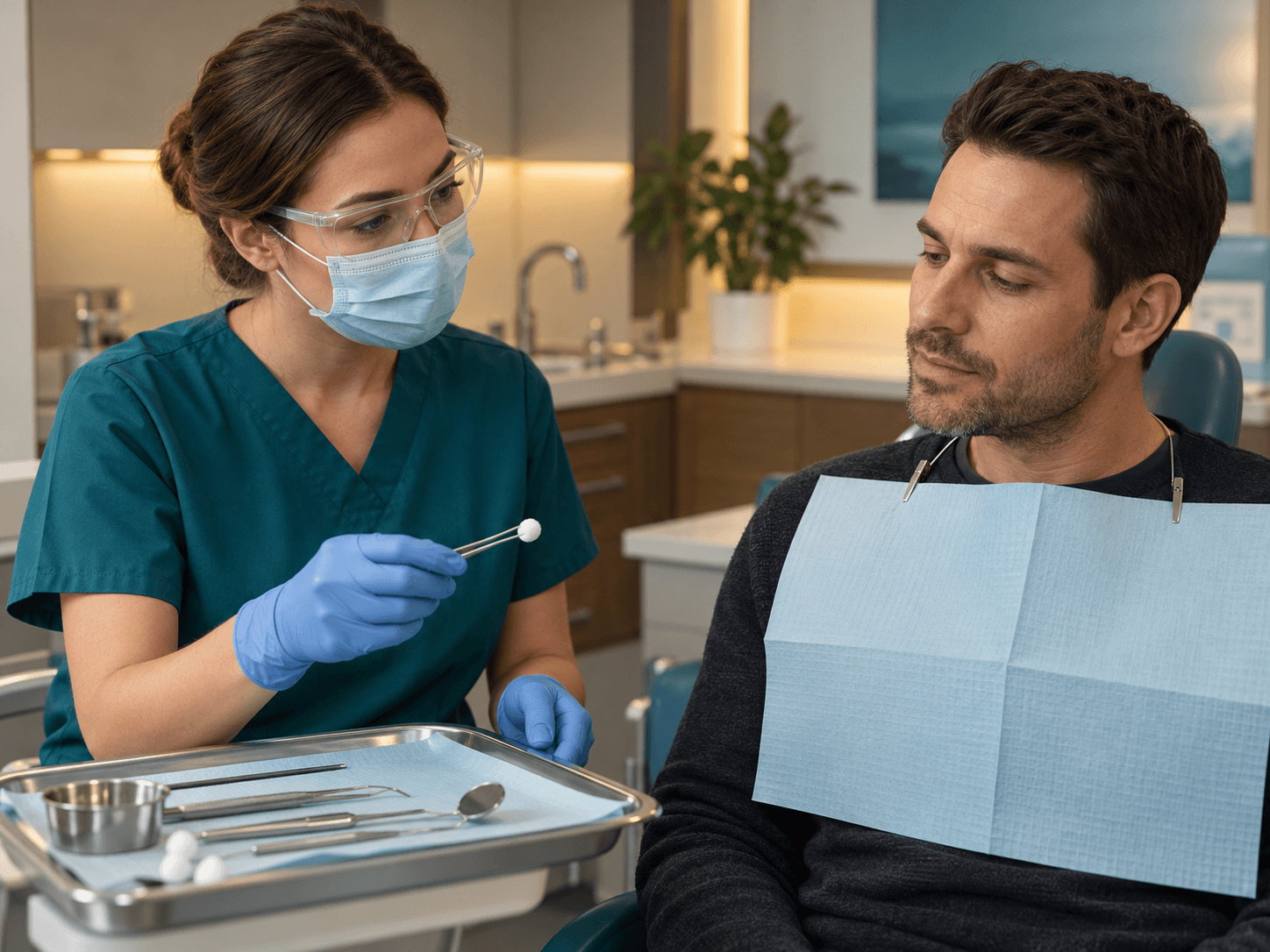
The dentist briefly applies something cold to a tooth and asks when you feel it and when the feeling stops. This is one way to investigate the pulp, the tissue inside the tooth. Cold and electric pulp tests are often called 'vitality tests,' but more precisely they test sensibility: a nerve response. They do not directly measure the pulp's blood supply.[1]
A comparison is more useful than one reaction
The clinician may test nearby teeth or a corresponding tooth on the other side first. That helps establish what a usual response feels like for you. Report what you actually notice, including whether the sensation disappears promptly or lingers. You do not need to decide which answer sounds healthy or tolerate a test silently to be helpful.[2]
No response does not automatically prove that the pulp is dead. Recent injury, calcification and other circumstances can complicate interpretation. Likewise, a response to cold does not establish that the pulp is healthy. The findings need to fit the history, examination and any appropriate imaging. The AAE's diagnostic guidance explicitly cautions against deciding from a single isolated finding.[1][2]
Describe the pain you came in with
Was the problem a quick cold twinge, pain that lingered after a drink, spontaneous aching, or discomfort when biting? Say whether the test reproduced your familiar symptom or felt different. Mention recent dental work and injuries, even if they seemed minor. Timing and triggers help the clinician interpret the examination.[1]
For example: 'The cold feeling here stopped quickly, but the ache that wakes me at night lasts much longer.' That is clearer than changing your description to match what you think a test should show. If you need a pause, use the agreed signal; the appointment is not an endurance test.
Uncertainty can require another assessment
Sometimes the findings do not yet support a definite diagnosis. Reassessment or referral to an endodontist may be appropriate. Ask what remains uncertain, what change should prompt an earlier call, and what the next visit is intended to establish. Do not reproduce the examination at home with ice, hot objects or repeated biting. A home experiment cannot supply the controlled comparison and clinical context of the appointment.[2]